
EN हिंदी

Historical Places in India

Discover India’s glorious history through its most famous historical and heritage sites

Akbar’s Tomb (Sikandra)

Agra Uttar Pradesh

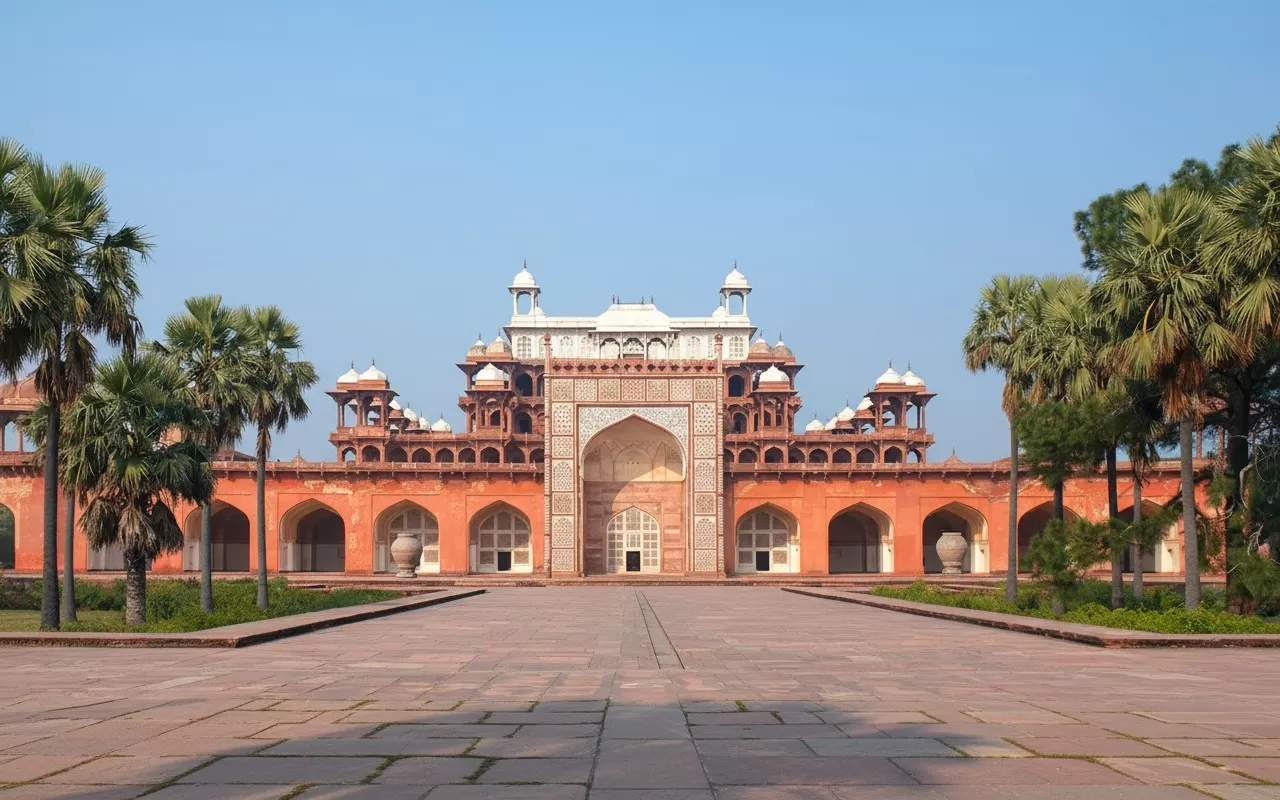
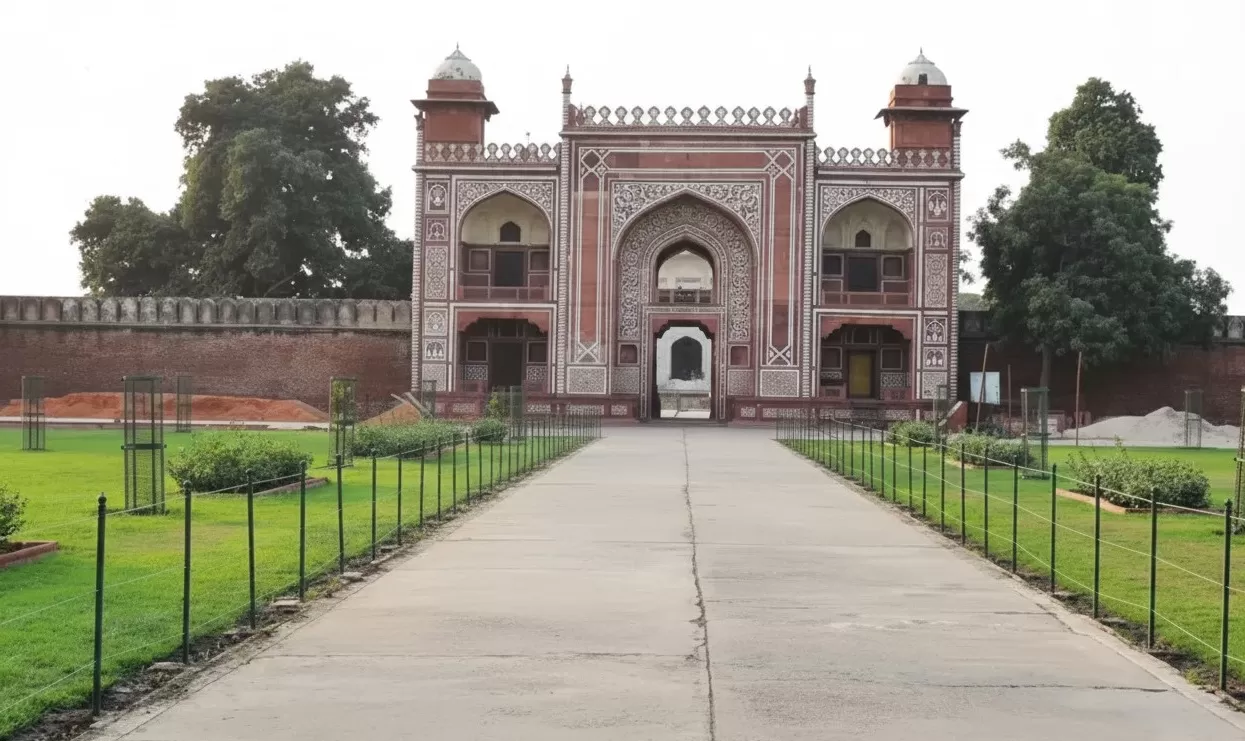
Akbar's Tomb is one of the finest examples of Mughal architecture in India. Located in Sikandra, about 10 km from Agra city, it is the final resting place of the great Mughal Emperor Akbar. Built between 1605 and 1613 by his son Emperor Jahangir, the monument beautifully combines Islamic, Hindu, Buddhist, and Jain architectural styles. Surrounded by lush gardens and peaceful pathways, the tomb reflects Akbar's vision of religious harmony and cultural integration.

🌍 About This Place

Akbar's Tomb is one of the most important Mughal monuments in India and stands as a symbol of Emperor Akbar's progressive vision and legacy. Located in Sikandra on the outskirts of Agra, the monument was commissioned by Akbar himself during his lifetime and completed by his son Jahangir in 1613. The tomb is set within a vast Charbagh-style garden spread across several acres, creating a serene and majestic atmosphere.

The architecture of the monument is unique among Mughal structures. Unlike many Mughal mausoleums that feature large central domes, Akbar's Tomb follows a pyramid-like, multi-tiered design. The structure is primarily built of red sandstone and decorated with white marble, geometric motifs, floral patterns, and intricate calligraphy. The grand southern gateway is particularly impressive, featuring four white marble minarets that are considered among the earliest examples of Mughal minaret design.
The monument reflects Akbar's policy of religious tolerance and cultural inclusiveness. Architectural elements inspired by Hindu, Islamic, Jain, and Buddhist traditions can be seen throughout the complex. This fusion of styles makes the tomb an important landmark in the evolution of Mughal architecture.

Visitors entering the complex pass through beautifully landscaped gardens inhabited by deer, peacocks, monkeys, and various bird species. The peaceful environment provides an ideal setting for history lovers, photographers, and architecture enthusiasts.

Inside the main structure lies the symbolic cenotaph of Akbar, while the actual burial chamber is located in the basement. The intricate craftsmanship, historical significance, and tranquil surroundings make Akbar's Tomb one of Agra's most rewarding heritage attractions. It offers visitors a fascinating glimpse into the life, achievements, and enduring legacy of one of India's greatest rulers.

🎯 Things to do

  • ✔ Explore Mughal architecture and carvings
  • ✔ Walk through the symmetrical Mughal gardens
  • ✔ Photography (especially morning light)
  • ✔ Observe wildlife inside the garden complex
  • ✔ Study Indo-Islamic architectural fusion
  • ✔ Relax in the peaceful green surroundings

📍 Near By

  • Taj Mahal – 15 km
  • Agra Fort – 12 km
  • Fatehpur Sikri – 40 km
  • Itmad-ud-Daula – 14 km
  • Mehtab Bagh – 16 km

🚗 How to Reach

  • By Air: Nearest airport is in Agra (Kheria Airport) about 10 km away.
  • By Train: Agra has major railway stations like Agra Cantt  well connected to cities like Delhi and Jaipur.
  • By Road: Easily accessible via NH-19; Sikandra is about 8–10 km from central Agra. Local taxis autos  and buses are available.

⭐ Why Visit

  • Unique Mughal architecture without a central dome
  • Peaceful gardens with wildlife
  • Historical significance linked to Akbar’s reign
  • Less crowded than the Taj Mahal

💡 Travel Tips

  • Visit early morning or late afternoon for better weather
  • Wear comfortable walking shoes
  • Carry water especially in summer
  • Combine visit with nearby attractions in Agra
  • Respect monument rules and avoid littering

✨ Special Features

  • Fusion of multiple architectural styles
  • Grand entrance gateway with marble decorations
  • Charbagh garden layout
  • Tiered pyramid-like tomb structure

Kumbhalgarh

Kumbhalgarh Rajasthan

Kumbhalgarh Fort is one of India's most magnificent hill forts, located in the Aravalli Hills of Rajasthan. Built in the 15th century by Rana Kumbha, it is famous for its massive defensive wall stretching over 36 kilometers, often called the "Great Wall of India." The fort is a UNESCO World Heritage Site and offers breathtaking views, impressive architecture, ancient temples, palaces, and rich Rajput history. It is also known as the birthplace of Maharana Pratap.

🌍 About This Place

Kumbhalgarh Fort, nestled in the rugged Aravalli hills of Rajasthan, stands as a remarkable symbol of Rajput strength and architectural brilliance. Built during the 15th century by Maharana Kumbha, the fort is renowned for its massive defensive walls that stretch over 36 kilometers, making it the second longest continuous wall in the world after the Great Wall of China. This magnificent structure was designed to protect the Mewar kingdom and served as a refuge during times of war.

The fort complex is spread across several hilltops and includes numerous palaces, temples, and gardens. Among its many historical treasures, Kumbhalgarh is famously known as the birthplace of Maharana Pratap, one of the greatest warriors in Indian history. The Badal Mahal, or Palace of Clouds, situated at the highest point, offers stunning views of the surrounding landscape.
Inside the fort, visitors can explore over 360 temples, both Jain and Hindu, reflecting the region’s rich cultural heritage. The architecture features massive gates, thick walls, and watchtowers that highlight the advanced military engineering of the time.

The surrounding Kumbhalgarh Wildlife Sanctuary adds to the charm of the destination, offering opportunities to spot wildlife like leopards, wolves, and various bird species. The fort becomes especially enchanting during the evening light and sound show, which narrates its glorious past.

Kumbhalgarh Fort is not just a historical monument but a testament to the courage, vision, and artistic excellence of Rajasthan’s royal legacy, making it a must-visit destination for history enthusiasts and travelers alike.

🎯 Things to do

  • Explore the massive 36 km fort wall
  • Visit Badal Mahal
  • See the birthplace of Maharana Pratap
  • Explore ancient Jain & Hindu temples
  • Enjoy panoramic Aravalli hill views
  • Attend the Light & Sound Show in the evening
  • Photography at sunset 📸

📍 Near By

  • Kumbhalgarh Wildlife Sanctuary (Nature & wildlife safari)
  • Ranakpur Jain Temple (Marble temple ~50 km)
  • Haldighati (Historic battle site)
  • Nathdwara (Famous Krishna temple town)
  • Udaipur (~85 km away)...

🚗 How to Reach

  • By Air: Nearest airport is Maharana Pratap Airport (~85 km).
  • By Rail: Nearest railway station is Udaipur City Railway Station (~85 km).
  • By Road: Well connected via road from Udaipur (2–3 hrs drive) Taxis and buses are easily available.

⭐ Why Visit

  • Experience breathtaking panoramic views of the Aravalli hills
  • Walk along the 36 km long fort wall
  • Explore ancient temples and palaces
  • Witness the birthplace of Maharana Pratap
  • Enjoy the mesmerizing evening light and sound show

💡 Travel Tips

  • Visit between October and March for pleasant weather
  • Wear comfortable shoes for walking
  • Carry water and sun protection
  • Visit early morning or evening for best views
  • Don’t miss the light & sound show

✨ Special Features

  • Second-longest wall in the world (~36 km)
  • Over 360 temples inside the fort complex
  • Strategic hilltop construction for defense
  • Massive gates and intricate architecture
  • Wildlife sanctuary nearby: Kumbhalgarh Wildlife Sanctuary

Srirangapatna

Mandya Karnataka

Srirangapatna is a historic island town in Karnataka, located on the banks of the River Kaveri near Mysuru. It served as the capital of the Kingdom of Mysore under Tipu Sultan and is renowned for its rich heritage, ancient temples, forts, and monuments. The town attracts history enthusiasts, pilgrims, and nature lovers alike. Its blend of cultural significance, architectural beauty, and historical importance makes Srirangapatna one of Karnataka's most fascinating tourist destinations.

🌍 About This Place

Srirangapatna is one of Karnataka’s most treasured cultural heritage sites, offering a deep connection to India’s rich and complex past. Situated on an island formed by the Kaveri River, this historic town served as the capital of Tipu Sultan, famously known as the “Tiger of Mysore.” The town stands as a symbol of resistance against British colonial rule, particularly during the Anglo-Mysore Wars, which shaped much of South Indian history.

The architectural landscape of Srirangapatna reflects a harmonious blend of Hindu and Islamic styles. The Ranganathaswamy Temple, dedicated to Lord Vishnu, is a major pilgrimage center and an excellent example of Dravidian architecture. In contrast, structures like Daria Daulat Bagh, Tipu Sultan’s summer palace, display intricate Indo-Islamic designs, with detailed frescoes depicting royal life and historic battles.

Visitors can also explore the Srirangapatna Fort, which still retains its massive walls and gateways. The site where Tipu Sultan fell in battle remains a place of historical significance. Walking through the town feels like stepping back in time, with every corner telling a story of bravery, culture, and transformation.

Apart from its historical importance, Srirangapatna offers serene natural surroundings, with the flowing Kaveri River adding to its charm. It is an ideal destination for history enthusiasts, architecture lovers, and travelers seeking a blend of culture and tranquility.

🎯 Things to do

  • Visit Sri Ranganathaswamy Temple
  • Explore Tipu Sultan’s Summer Palace
  • Visit Gumbaz (Tipu’s Mausoleum)
  • Walk around the historic fort walls
  • Visit Colonel Bailey’s Dungeon
  • Enjoy Cauvery riverside views
  • Photography of heritage monuments

📍 Near By

  • Brindavan Gardens (20 km)
  • Mysore Palace (15 km)
  • Ranganathittu Bird Sanctuary (4 km)
  • Nimishamba Temple (within town)
  • Krishnaraja Sagar Dam (18 km)

🚗 How to Reach

  • By Air: Nearest airport is in Bengaluru (~125 km).
  • By Train: Srirangapatna has a small railway station; major connectivity via Mysuru (15 km).
  • By Road: Well-connected by NH-275; frequent buses and taxis from Bengaluru and Mysuru.

⭐ Why Visit

  • Explore the legacy of Tipu Sultan
  • Visit ancient temples like Ranganathaswamy Temple
  • Witness historical battle sites linked to the Anglo-Mysore Wars
  • Experience peaceful riverside scenery

💡 Travel Tips

  • Best time: October to March
  • Wear comfortable footwear for walking
  • Hire a local guide for historical insights
  • Combine with a trip to Mysuru for a fuller experience
  • Carry water and sun protection

✨ Special Features

  • Island town formed by the Kaveri River
  • Blend of Hindu and Islamic architecture
  • Important monuments like Daria Daulat Bagh (summer palace)
  • Fort walls and gateways showcasing military design

Nahargarh Fort

Jaipur Rajasthan

Perched on the rugged Aravalli Hills overlooking the Pink City of Jaipur, Nahargarh Fort is one of Rajasthan’s most famous historical attractions. Built in 1734 by Maharaja Sawai Jai Singh II, the fort originally served as a defensive structure to protect Jaipur from invading forces. The name “Nahargarh” means “abode of tigers,” and local legends say the fort was haunted by the spirit of Prince Nahar Singh, after whom it was named. Today, the fort is admired for its majestic architecture, panoramic city views, and rich Rajput history.

🌍 About This Place

Nahargarh Fort stands proudly on the Aravalli Hills, forming an important part of Jaipur’s rich heritage and history. Constructed in 1734 by Maharaja Sawai Jai Singh II, the founder of Jaipur, the fort was initially designed to strengthen the defense of the city. Over the years, it evolved into a royal retreat where kings and queens spent their leisure time amidst nature and cool hilltop surroundings.

The fort combines Rajput and Indo-European architectural styles, featuring grand courtyards, decorative windows, elegant corridors, and beautifully painted interiors. One of its most admired sections is Madhavendra Bhawan, built by Maharaja Sawai Madho Singh for his queens. This palace consists of multiple identical suites connected by passages, showcasing the luxurious lifestyle of Rajasthan’s royal families.

Nahargarh Fort is especially popular for the breathtaking panoramic view it offers of Jaipur city. During sunset, the entire city glows in shades of gold and pink, creating a magical atmosphere for visitors and photographers. The fort also attracts adventure seekers who enjoy the scenic drive and trekking routes around the hills.

Apart from its historical significance, the fort has become a favorite destination for tourists seeking peace, culture, and photography. Several Bollywood films and music videos have been shot here due to its royal backdrop and scenic beauty. Whether exploring its historic chambers, enjoying the cool breeze from the hilltop, or admiring Jaipur’s skyline, Nahargarh Fort provides a memorable experience that reflects the grandeur and cultural richness of Rajasthan.

🎯 Things to do

  • Enjoy panoramic Jaipur city views
  • Explore Madhavendra Bhawan palace suites
  • Visit the Wax Museum & Sheesh Mahal
  • Sunset photography
  • Visit nearby Jaigarh Fort
  • Dine at the fort’s rooftop restaurant
  • Enjoy cycling/trekking route up the hill

📍 Near By

  • Jaigarh Fort – 6 km
  • Amber Fort – 15 km
  • Jal Mahal – 10 km
  • Hawa Mahal – 8 km
  • City Palace Jaipur – 8 km
  • Jantar Mantar – 8 km
  • Kanak Vrindavan Garden – 12 km

🚗 How to Reach

  • By Air: The nearest airport is Jaipur International Airport about 25 km away.
  • By Train: Jaipur Junction Railway Station is around 18 km from the fort.
  • By Road: Taxis auto-rickshaws and local buses are easily available from Jaipur city. The road to the fort winds through scenic hills and offers beautiful views.

⭐ Why Visit

  • Spectacular sunset views over Jaipur city.
  • Historic Rajput architecture and royal interiors.
  • Photography opportunities with scenic landscapes.
  • Peaceful atmosphere away from city crowds.
  • Popular cafés and viewpoints for relaxing evenings.

💡 Travel Tips

  • Visit during early morning or sunset for pleasant weather and stunning views.
  • Carry water/ sunglasses and comfortable walking shoes.
  • Avoid visiting during peak afternoon heat in summer.
  • Keep your camera charged for panoramic photography.
  • Weekdays are less crowded than weekends.

✨ Special Features

  • Connected historically with Jaigarh Fort through underground passages.
  • Features Madhavendra Bhawan a palace with beautifully designed suites for royal queens.
  • Offers one of the best panoramic views of Jaipur.
  • Famous shooting location for movies and music videos.

Jantar Mantar Jaipur

Jaipur Rajasthan

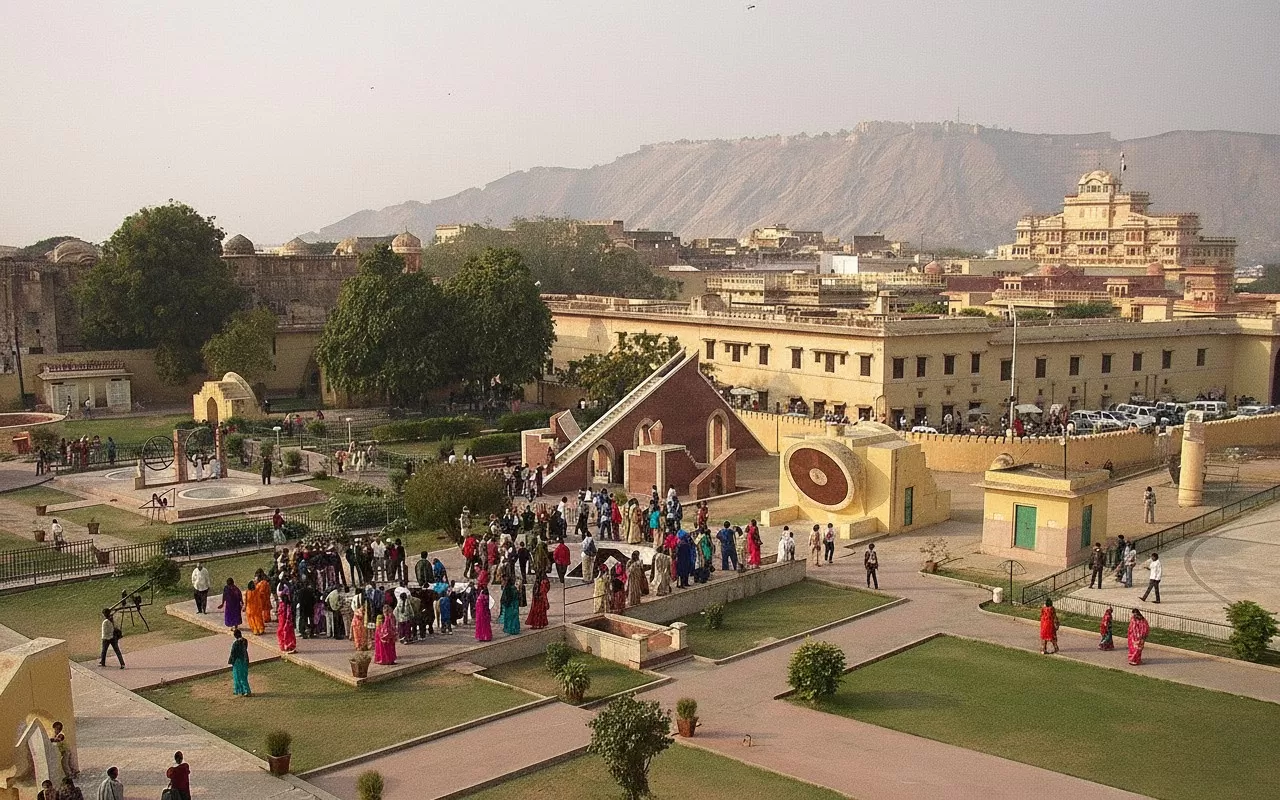
Jantar Mantar Jaipur is a UNESCO World Heritage astronomical observatory built by Maharaja Sawai Jai Singh II in the 18th century. It contains the world’s largest stone sundial and a collection of 19 astronomical instruments used to measure time, track celestial bodies, and predict eclipses. Located near City Palace in Jaipur, it reflects advanced ancient Indian science and architectural precision. The site remains one of the best-preserved observatories of its kind and attracts students, historians, and tourists interested in astronomy and heritage.

🌍 About This Place

Jantar Mantar Jaipur is one of the most remarkable scientific heritage sites in India, showcasing the brilliance of 18th-century astronomical knowledge. Constructed by Maharaja Sawai Jai Singh II in 1734, it is part of a series of five observatories built across India, but the Jaipur observatory remains the largest and best preserved.

The site consists of 19 large architectural instruments made of stone and marble, each designed for specific astronomical calculations. Unlike modern telescopes, these instruments are fixed structures aligned with celestial bodies to measure time, predict eclipses, track stars, and determine planetary positions with impressive accuracy.
The most famous structure is the Samrat Yantra, a massive sundial that can measure time accurately up to a few seconds. Another key instrument, the Jai Prakash Yantra, helps locate celestial objects by reflecting the sky’s position on concave surfaces. These instruments demonstrate the advanced understanding of astronomy and mathematics in ancient India.

Located in the heart of Jaipur, near the City Palace and Hawa Mahal, Jantar Mantar is a UNESCO World Heritage Site that attracts tourists, students, researchers, and photography enthusiasts. Its geometric structures and historical significance make it a unique blend of science and architecture.Visitors can explore the site in 1–2 hours, preferably with a guide to understand the working principles of each instrument. The open layout offers excellent photography opportunities, especially during morning and evening light.

Today, Jantar Mantar stands not just as a tourist attraction but as a symbol of India’s scientific heritage and innovation. It continues to inspire curiosity about astronomy and ancient engineering, making it a must-visit destination in Jaipur for anyone interested in history, science, and culture.

🎯 Things to do

  • Explore the Samrat Yantra (giant sundial)
  • Observe instruments like Jai Prakash Yantra & Ram Yantra
  • Take a guided tour to understand astronomical concepts
  • Photography of massive geometric structures
  • Learn about ancient Indian astronomy
  • Combine visit with nearby Jaipur heritage sites

📍 Near By

  • City Palace Jaipur (Adjacent)
  • Hawa Mahal (300 meters)
  • Govind Dev Ji Temple
  • Johari Bazaar (Shopping market)
  • Albert Hall Museum (2.5 km)
  • Nahargarh Fort (6 km)
  • Amber Fort (11 km)

🚗 How to Reach

  • By Air: The nearest airport is Jaipur International Airport around 12 km away.
  • By Train: Reach Jaipur Junction Railway Station and take a taxi auto-rickshaw or bus.
  • By Road: Jaipur is well connected by highways from Delhi Agra and other major cities.

⭐ Why Visit

  • Explore ancient Indian astronomy and science.
  • Experience unique architectural and mathematical designs.
  • Enjoy photography of massive geometric instruments.
  • Learn how people measured time before modern technology.
  • Located near popular attractions like Hawa Mahal and City Palace.

💡 Travel Tips

  • Visit early morning or evening to avoid heat.
  • Hire a guide to understand the instruments better.
  • Carry water sunglasses and comfortable footwear.
  • Combine the visit with nearby heritage attractions.

✨ Special Features

  • World’s largest stone sundial.
  • UNESCO World Heritage recognition.
  • Scientific instruments built entirely from stone and marble.
  • Blend of astronomy mathematics  and architecture.

Hawa Mahal

Jaipur Rajasthan

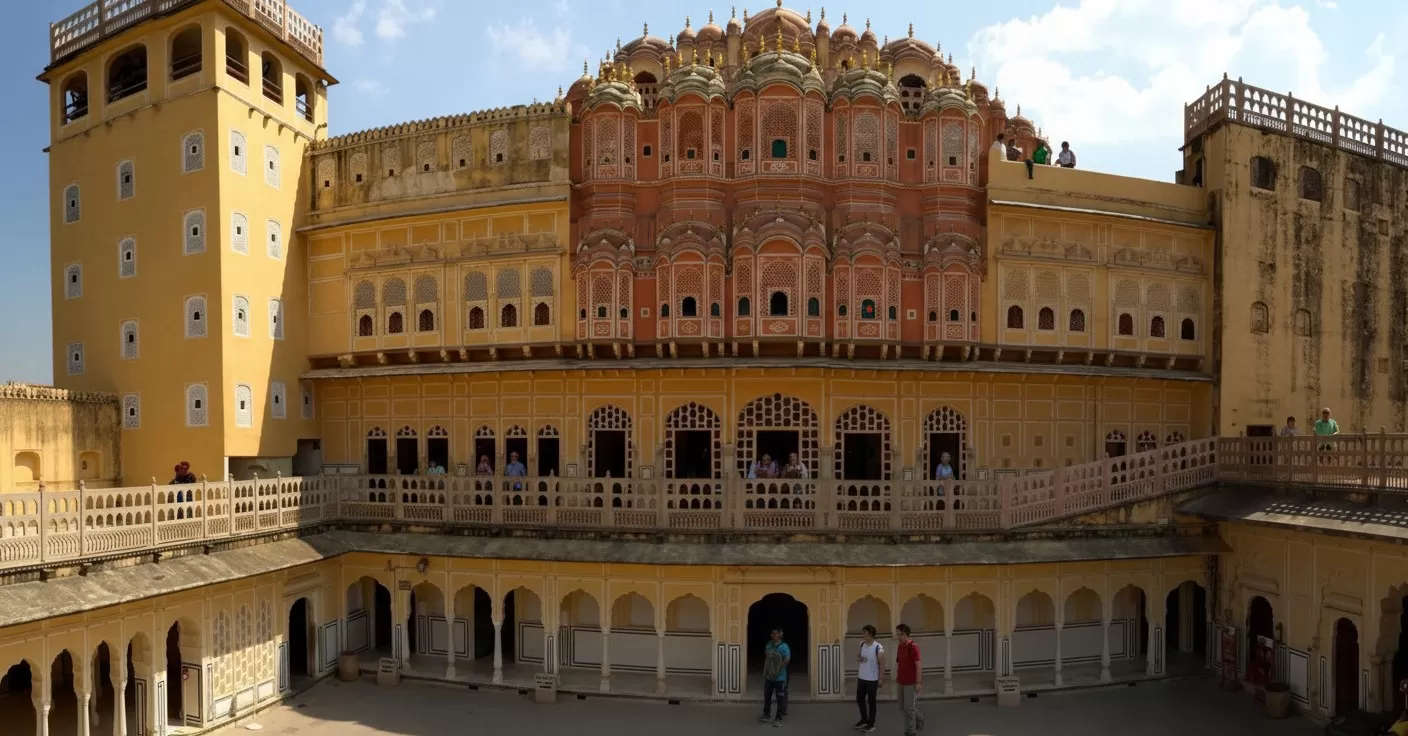
Hawa Mahal, also known as the “Palace of Winds,” is one of the most famous landmarks of Jaipur. Built in 1799 by Maharaja Sawai Pratap Singh, this five-story pink sandstone monument was designed by architect Lal Chand Ustad. The palace has 953 small windows called jharokhas, which allow cool air to circulate through the structure, keeping it naturally ventilated even during hot summers. Its unique honeycomb-shaped façade reflects the rich Rajput architectural style mixed with Mughal influences.

🌍 About This Place

Hawa Mahal is one of the most iconic monuments in India and a symbol of the rich cultural heritage of Rajasthan. Located in the heart of the Pink City, Jaipur, this magnificent palace was constructed in 1799 by Maharaja Sawai Pratap Singh. Designed by Lal Chand Ustad, the structure resembles the crown of Lord Krishna and showcases a perfect blend of Rajput and Mughal architectural styles. Built using red and pink sandstone, Hawa Mahal attracts thousands of visitors every year due to its unique appearance and historical significance.

The palace is famous for its 953 small windows, known as jharokhas, decorated with intricate latticework. These windows were specially designed to allow cool air to pass through the palace, creating a natural air-conditioning effect during the hot desert climate. The royal women of the palace used these windows to observe daily life and festive processions on the streets while maintaining royal privacy according to the purdah system.
Although the front façade looks grand and massive, the palace is surprisingly narrow from inside. Visitors can climb through ramps and corridors to reach the upper floors, where breathtaking views of Jaipur city can be enjoyed. The monument becomes especially beautiful during sunrise when the sunlight reflects on the pink sandstone walls.

Hawa Mahal is not only an architectural masterpiece but also an important cultural landmark that reflects the artistic excellence and royal lifestyle of Rajasthan. A visit to Jaipur remains incomplete without exploring this historic Palace of Winds.

🎯 Things to do

  • Admire the iconic honeycomb façade
  • Explore the small chambers and corridors
  • Visit the small museum inside
  • Enjoy panoramic views of Jaipur from the top
  • Photography (especially morning shots)
  • Explore nearby bazaars for shopping

📍 Near By

  • 🏰 City Palace Jaipur
  • 🔭 Jantar Mantar (UNESCO Site)
  • 🌊 Jal Mahal
  • 🏯 Amber Fort (11 km)
  • 🌄 Nahargarh Fort
  • 🛍 Johari Bazaar & Bapu Bazaar
  • 🌳 Ram Niwas Garden

🚗 How to Reach

  • By Air: The nearest airport is Jaipur International Airport  around 13 km away.
  • By Train: Jaipur Junction Railway Station is about 5 km from Hawa Mahal.
  • By Road: Jaipur is well connected by highways. Local taxis  auto-rickshaws  and buses easily reach the monument.
  • Local Transport: From the city center visitors can use e-rickshaws or rental bikes.

⭐ Why Visit

  • Experience the royal heritage of Rajasthan.
  • Admire stunning Rajput architecture and detailed latticework.
  • Enjoy panoramic views of Jaipur city from the top floors.
  • Explore nearby attractions like City Palace and Jantar Mantar.
  • Perfect destination for photography and cultural exploration.

💡 Travel Tips

  • Visit early morning for cooler weather and better photographs.
  • Wear comfortable footwear because climbing ramps and stairs is required.
  • Carry water during summer months.
  • Hire a local guide to learn the historical significance.
  • Avoid peak afternoon hours due to heavy tourist crowds.

✨ Special Features

  • 953 intricately designed windows (jharokhas).
  • Natural cooling ventilation system.
  • Unique pink sandstone honeycomb façade.
  • Blend of Rajput and Mughal architecture.
  • Built so royal women could observe street festivals without being seen.

Itmad-ud-Daula

Agra Uttar Pradesh

Itmad-ud-Daula, popularly known as the "Baby Taj," is a beautiful Mughal mausoleum located in Agra. Built between 1622 and 1628 by Nur Jahan in memory of her father, Mirza Ghiyas Beg, it is considered a precursor to the famous Taj Mahal. The monument is renowned for its intricate marble inlay work, delicate lattice screens, Persian-inspired architecture, and peaceful riverside setting along the Yamuna River, making it one of Agra's most elegant historical attractions.

🌍 About This Place

Located on the eastern bank of the Yamuna River in Agra, Itmad-ud-Daula is one of the finest examples of early Mughal architecture. Constructed between 1622 and 1628 by Empress Nur Jahan, the monument serves as the tomb of her father, Mirza Ghiyas Beg, who was honored with the title Itmad-ud-Daula, meaning "Pillar of the State." The mausoleum represents a significant transition in Mughal architectural style and is often regarded as the direct predecessor of the Taj Mahal.

Unlike earlier Mughal tombs that primarily used red sandstone, Itmad-ud-Daula was among the first monuments in India to be built entirely of white marble. The structure is famous for its intricate pietra dura work, where colorful semi-precious stones are inlaid into marble to create floral motifs, geometric patterns, and decorative designs. This artistic technique later reached its peak in the Taj Mahal.
The tomb stands within a beautifully planned Charbagh garden, divided into four symmetrical sections by water channels and pathways. At each corner of the mausoleum rises an elegant octagonal tower, adding balance and grandeur to the structure. The monument's marble lattice screens allow soft light to filter into the interior chambers, creating a serene and graceful atmosphere.

Visitors are often impressed by the fine craftsmanship visible in every corner of the building. Detailed carvings, painted ceilings, and delicate ornamentation reflect the artistic excellence of Mughal artisans. Because it receives fewer visitors than the Taj Mahal, the site offers a quieter and more relaxed experience.Today, Itmad-ud-Daula remains one of Agra's most treasured historical landmarks. Its architectural beauty, historical significance, and peaceful surroundings make it a must-visit destination for travelers interested in Mughal history, heritage architecture, and cultural tourism. The monument beautifully showcases the evolution of Mughal art and design that later culminated in the world-famous Taj Mahal.

🎯 Things to do

  • Explore detailed marble inlay artwork
  • Photography (especially river-side views)
  • Walk in Mughal-style gardens
  • Study Mughal architecture evolution
  • Sunset views near Yamuna river.

📍 Near By

  • Taj Mahal – 7 km
  • Agra Fort – 5 km
  • Mehtab Bagh – Across Yamuna River
  • Akbar’s Tomb (Sikandra) – 10 km
  • Fatehpur Sikri – 40 km
  • Kinari Bazaar (Shopping) – 4 km.

🚗 How to Reach

  • By Air: Nearest airport is Agra Airport about 10 km away.
  • By Train: Reach Agra Cantt Railway Station then take a taxi auto-rickshaw or cab.
  • By Road: Agra is well connected via the Yamuna Expressway from Delhi and national highways from nearby cities.

⭐ Why Visit

  • Beautiful Mughal marble architecture
  • Less crowded than the Taj Mahal
  • Excellent photography location
  • Peaceful riverside gardens
  • Rich historical and artistic significance

💡 Travel Tips

  • Visit early morning or evening for pleasant weather and better photos.
  • Carry water and comfortable walking shoes.
  • Hire a local guide for historical insights.
  • Combine the trip with nearby attractions like the Taj Mahal and Agra Fort.
  • Avoid peak afternoon heat during summer months.

✨ Special Features

  • Known as the “Baby Taj”
  • First Mughal monument built completely with white marble
  • Famous for intricate pietra dura inlay artwork
  • Beautiful Persian-inspired charbagh gardens
  • Fine jali screens and delicate carvings
  • Scenic location beside the Yamuna River

Agra Fort

Agra Uttar Pradesh

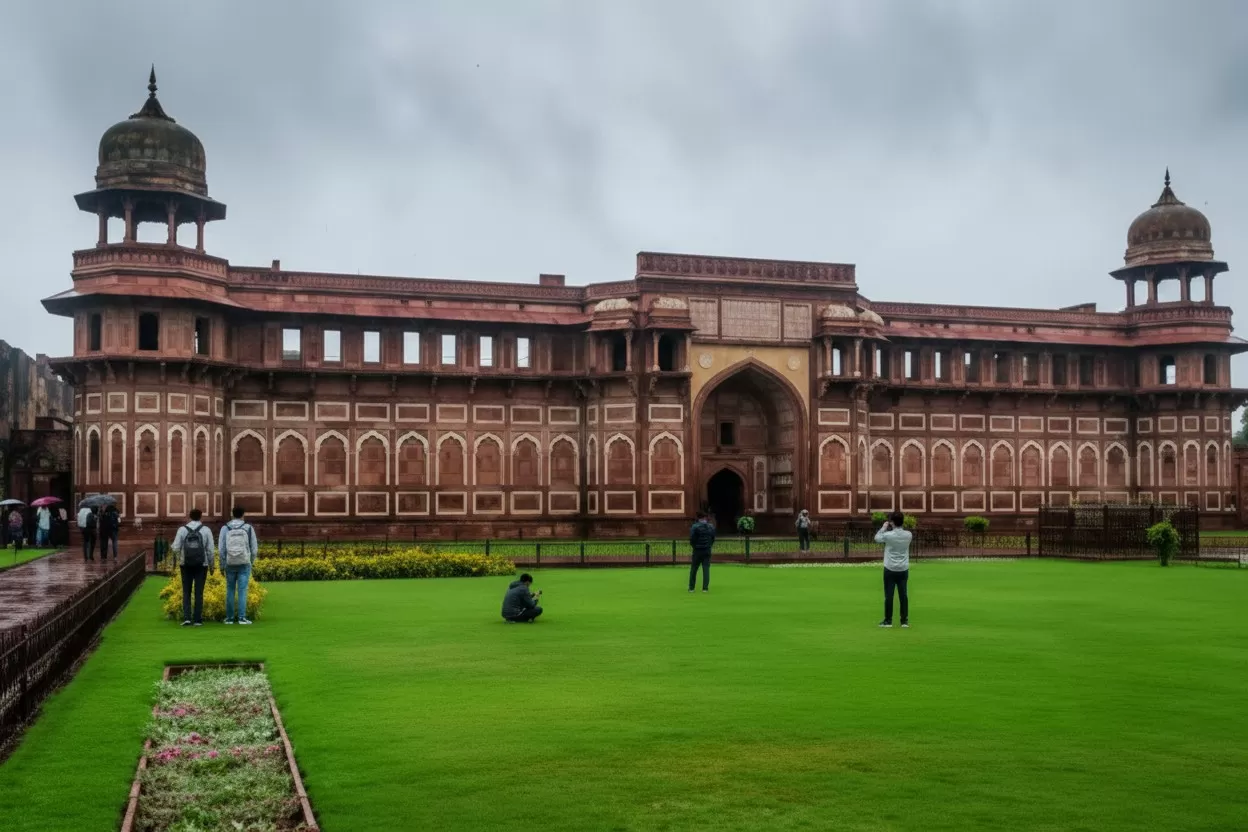
Agra Fort is one of India's most magnificent historical monuments and a UNESCO World Heritage Site. Built mainly by Emperor Akbar in the 16th century, this massive red sandstone fort served as the primary residence of the Mughal emperors. Located on the banks of the Yamuna River, it houses beautiful palaces, mosques, audience halls, and gardens. The fort showcases a blend of Islamic and Hindu architectural styles and offers stunning views of the nearby Taj Mahal.

🌍 About This Place

Agra Fort stands as one of the finest examples of Mughal architecture and military engineering in India. Situated along the banks of the Yamuna River in Agra, the fort was commissioned by Emperor Akbar in 1565 and later expanded by his successors, including Jahangir and Shah Jahan. Constructed primarily from red sandstone, the fort served as the main residence and administrative center of the Mughal Empire for many years.

Spread across nearly 94 acres, Agra Fort is enclosed by imposing walls rising over 20 meters high. Within these fortified boundaries lie a series of magnificent structures that reflect the grandeur of the Mughal era. Notable attractions include Jahangiri Mahal, a stunning palace built for the royal family; Khas Mahal, a beautiful marble residence; and Musamman Burj, an elegant octagonal tower associated with Emperor Shah Jahan.
The fort also contains Diwan-i-Aam (Hall of Public Audience) and Diwan-i-Khas (Hall of Private Audience), where emperors conducted state affairs and received distinguished guests. The intricate carvings, marble inlay work, decorative arches, and spacious courtyards highlight the artistic brilliance of Mughal craftsmen.

One of the most fascinating stories connected with Agra Fort is that Shah Jahan, the builder of the Taj Mahal, spent his final years imprisoned here by his son Aurangzeb. From Musamman Burj, he is believed to have gazed at the Taj Mahal until his death.

Today, Agra Fort attracts millions of visitors from around the world who come to admire its architectural beauty, historical significance, and cultural heritage. The fort provides a captivating journey through India's imperial past while offering breathtaking views of the Taj Mahal, making it an essential destination for anyone exploring Agra and the rich legacy of the Mughal Empire.

🎯 Things to do

  • Explore Mughal palaces and courtyards
  • Visit Diwan-i-Aam and Diwan-i-Khas
  • See Musamman Burj (Taj view point)
  • Visit Moti Masjid
  • Take historical guided tour
  • Photography of red sandstone
  • architecture
  • Evening visit for golden sunset views.

📍 Near By

  • Taj Mahal – 2.5 km
  • Mehtab Bagh – Garden with Taj view
  • Itmad-ud-Daula (Baby Taj)
  • Akbar’s Tomb and Sikandra
  • Fatehpur Sikri – 40 km
  • Jama Masjid Agra.

🚗 How to Reach

  • By Air: Nearest airport is in Agra while major international access is through Delhi.
  • By Train: Agra Cantt Railway Station is well connected to Delhi  Mumbai  Jaipur and other major cities.
  • By Road: Agra is connected through the Yamuna Expressway from Delhi and national highways from nearby states.
  • Local Transport: Auto-rickshaws  taxis  e-rickshaws and buses are easily available.

⭐ Why Visit

  • UNESCO World Heritage Site
  • Stunning Mughal architecture
  • Rich historical significance
  • Beautiful palaces and royal halls
  • Excellent photography spots
  • View of the Taj Mahal from the fort
  • Ideal destination for history lovers and tourists

💡 Travel Tips

  • Visit early morning or evening for pleasant weather.
  • Wear comfortable walking shoes.
  • Carry water and sunglasses during summer.
  • Hire a guide for better historical understanding.
  • Keep cameras charged for photography.
  • Avoid weekends and holidays for smaller crowds.

✨ Special Features

  • Massive 70-foot-high defensive walls
  • Blend of red sandstone and white marble architecture
  • Historic residence of Mughal emperors
  • Beautiful courtyards mosques and audience halls
  • Strategic riverside location near the Yamuna River
  • Spectacular view of the Taj Mahal from Musamman Burj

Khajuraho Group of Monuments

Khajuraho Chhatarpur Madhya Pradesh

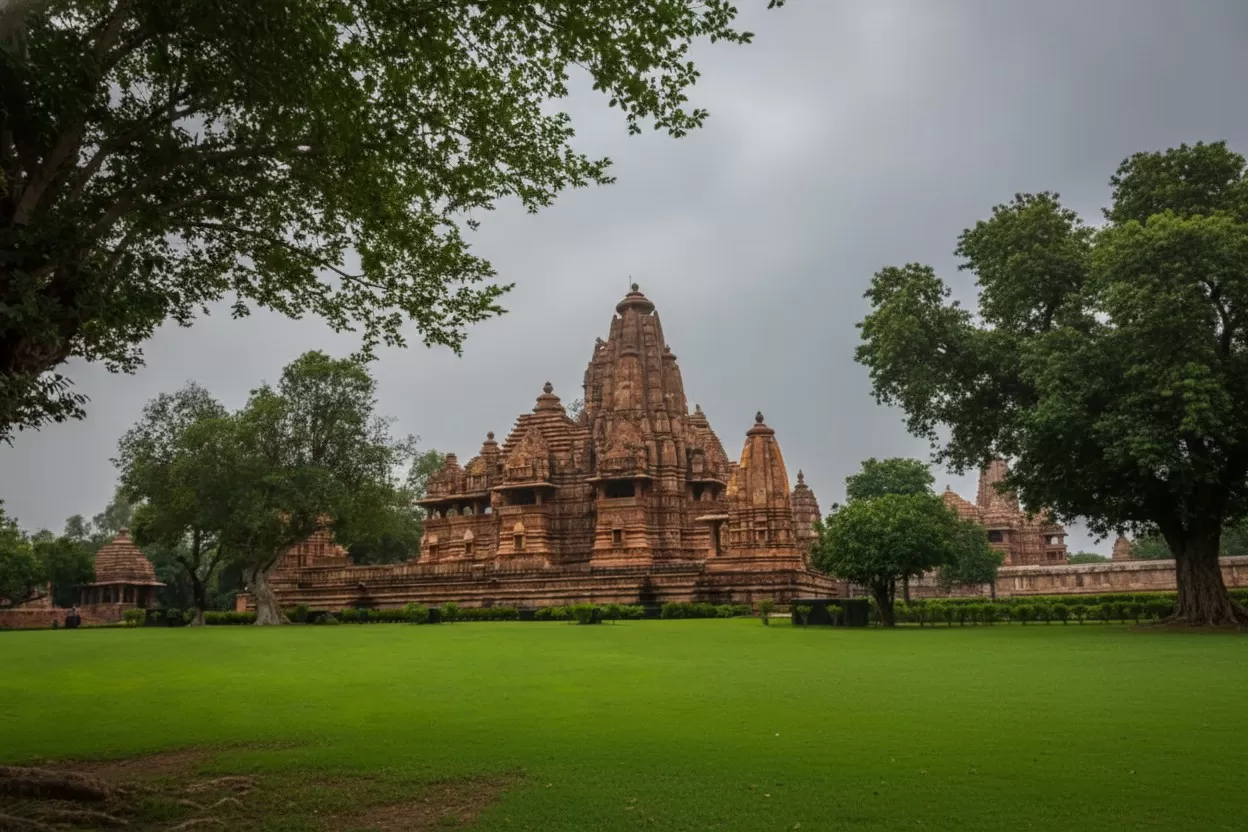
The Khajuraho Group of Monuments is a UNESCO World Heritage Site renowned for its stunning Nagara-style temple architecture and intricate stone carvings. Built between the 9th and 12th centuries by the Chandela dynasty, the temples showcase exceptional craftsmanship, depicting gods, goddesses, celestial beings, daily life, music, dance, and famous erotic sculptures. Originally consisting of around 85 temples, about 25 survive today. Khajuraho is considered one of India's greatest architectural and cultural treasures, attracting visitors, historians, and art enthusiasts from around the world.

🌍 About This Place

The Khajuraho Group of Monuments is one of India's most celebrated historical and architectural destinations. Located in the Chhatarpur district of Madhya Pradesh, the temple complex was built by the Chandela rulers between 950 and 1050 CE. The monuments are globally recognized for their extraordinary architecture, intricate sculptures, and artistic excellence, earning UNESCO World Heritage Site status in 1986.

Originally, Khajuraho consisted of around 85 temples spread over a vast area. Today, about 25 temples remain, preserving the rich cultural and spiritual heritage of medieval India. These temples are divided into Western, Eastern, and Southern Groups, each showcasing unique architectural styles and religious significance. The temples are dedicated to Hindu and Jain deities, reflecting the region's religious diversity and tolerance.
The most famous temples include Kandariya Mahadeva Temple, Lakshmana Temple, Vishvanatha Temple, and Chitragupta Temple. Their walls are adorned with thousands of sculptures depicting gods, goddesses, musicians, dancers, warriors, animals, and scenes from everyday life. The temples are particularly known for their erotic sculptures, which form only a small portion of the artwork but have gained worldwide attention. These carvings symbolize human emotions, spiritual growth, and the harmony between worldly and divine life.

Built primarily from sandstone, the temples exhibit remarkable craftsmanship and engineering precision. Their towering shikharas, detailed carvings, and symmetrical layouts make them masterpieces of Indian temple architecture.Apart from historical significance, Khajuraho offers a peaceful atmosphere, cultural events, museums, and a famous Light and Sound Show that narrates the history of the Chandela dynasty. The annual Khajuraho Dance Festival further enhances its cultural appeal by showcasing classical Indian dance performances against the magnificent temple backdrop. Today, Khajuraho remains a must-visit destination for travelers interested in history, art, architecture, spirituality, and India's rich cultural legacy.

🎯 Things to do

  • Visit Archaeological Museum nearby to see ancient artifacts and sculptures.
  • Attend Khajuraho Dance Festival (Feb) for cultural experiences.
  • Enjoy sunrise/sunset photography with temple silhouettes.
  • See Sound & Light Show in the evening explaining temple history.
  • Visit local markets
  • cafes
  • and take walking tours.
  • Combine with Panna National Park safaris for wildlife and nature experiences.

📍 Near By

  • Panna National Park – ~25–35 km for wildlife and safaris.
  • Raneh Falls / Ken River Canyon – A scenic waterfall and canyon site.
  • Ajaigarh Fort – Historic fort ~80 km away with panoramic views.
  • Local Markets & Cafés – Good for shopping & food experiences.

🚗 How to Reach

  • By Air :-Khajuraho Airport connects the town with major cities like Delhi and Varanasi.
  • By Train :-Khajuraho Railway Station is well connected to cities such as Delhi Kanpur and Jhansi.
  • By Road :-Khajuraho has good road connectivity from nearby cities:Jhansi – approx. 175 km; Satna – approx. 120 km;
  • Panna – approx. 45 km; Regular buses and taxis are available.

⭐ Why Visit

  • UNESCO World Heritage Site
  • Magnificent stone carvings and architecture
  • Ancient Hindu and Jain temples
  • Famous Khajuraho Dance Festival
  • Excellent photography destination
  • Peaceful spiritual atmosphere
  • Rich history of Chandela dynasty

💡 Travel Tips

  • Best time to visit: October to March
  • Wear comfortable walking shoes
  • Carry water  sunscreen  and hats during summer
  • Hire a local guide for better historical understanding
  • Visit early morning or evening for pleasant weather
  • Respect temple heritage and maintain cleanliness
  • Photography is allowed in most areas

✨ Special Features

  • Intricate sandstone carvings
  • Blend of spirituality and art
  • Nagara-style temple architecture
  • UNESCO recognition
  • Light and Sound Show in the evening
  • Unique erotic sculptures with symbolic meanings
  • Annual classical dance festival against temple backdrop

Sanchi Stupa

Sanchi Raisen Madhya Pradesh

The ancient Buddhist monument of Sanchi Stupa is one of India's most important historical and religious sites. Built by Emperor Ashoka in the 3rd century BCE, it showcases remarkable Buddhist architecture, intricate stone carvings, and beautifully decorated gateways. The Great Stupa at Sanchi symbolizes peace, enlightenment, and the teachings of Buddha. Recognized as a UNESCO World Heritage Site, Sanchi attracts history enthusiasts, pilgrims, photographers, and travelers from around the world seeking cultural and spiritual experiences.

🌍 About This Place

Sanchi Stupa stands atop a serene hill in the Raisen district of Madhya Pradesh and represents one of the finest surviving examples of ancient Buddhist architecture in the world. The site is best known for the Great Stupa, originally commissioned by Emperor Ashoka in the 3rd century BCE after he embraced Buddhism. Over the centuries, the monument was enlarged and enhanced by successive rulers, creating the magnificent structure visible today.

The Great Stupa is a hemispherical dome constructed to house sacred Buddhist relics. Surrounding the stupa is a stone railing and a circumambulatory path used by devotees for ritual walks. The most striking features are the four elaborately carved gateways, known as toranas, which depict scenes from the life of Buddha, Jataka tales, and various symbolic representations of Buddhist teachings. Interestingly, Buddha is often represented through symbols such as footprints, the Bodhi tree, and the wheel of Dharma rather than in human form.
The Sanchi complex includes several smaller stupas, ancient temples, monasteries, and the remains of pillars that provide valuable insights into the development of Buddhist art and architecture over many centuries. The site reflects influences from the Mauryan, Shunga, Satavahana, and Gupta periods, making it a treasure trove for historians and archaeologists.

Despite being one of the most significant Buddhist monuments in India, Sanchi retains a calm and peaceful atmosphere. Visitors can explore the beautifully preserved carvings, admire the engineering achievements of ancient builders, and enjoy panoramic views of the surrounding landscape. The combination of historical importance, architectural brilliance, religious significance, and scenic beauty makes Sanchi Stupa an unforgettable destination for travelers interested in India's rich cultural and spiritual heritage.

🎯 Things to do

  • Explore the Great Stupa & Toranas — admire carvings and symbolism
  • Walk the circumambulation path (pradakshina) around the stupa
  • Visit smaller stupas (No.2 & No.3) and understand their history
  • Sanchi Archaeological Museum — see artifacts
  • the Ashokan lion capital/ sculptures relics
  • Meditate or reflect in the tranquil and spiritual environment
  • Photography — especially of gateways and areas around sunrise/sunset
  • Attend sound & light shows (offered seasonally) to learn the site’s history after dark.

📍 Near By

  • Udayagiri Caves — ancient rock-cut caves with carvings (~10 km)
  • Bija Mandal Temple — historic temple ruins (~9 km)
  • Bhimbetka Rock Shelters — UNESCO site with prehistoric art (~57 km)
  • Satdhara Stupas (archaeological site) — ancient stupas ~9 km west of Sanchi
  • Sonari Stupas — another Buddhist complex ~11 km away
  • Vidisha Town — historic city ~10 km away with temples and ancient sites.

🚗 How to Reach

  • By Air: The nearest airport is Raja Bhoj Airport  about 55 km away.
  • By Train: The nearest railway station is Sanchi Railway Station. Major rail connectivity is available from Bhopal and Vidisha.
  • By Road: Sanchi is well connected by road from Bhopal Indore  and nearby cities. Regular buses and taxis are available.

⭐ Why Visit

  • Explore ancient Buddhist heritage and architecture.
  • Experience peaceful surroundings and spiritual atmosphere.
  • View detailed stone carvings and historic monuments.
  • Learn about Emperor Ashoka and Buddhist culture.
  • Ideal destination for history lovers photographers and travelers.

💡 Travel Tips

  • Best time to visit: October to March.
  • Wear comfortable walking shoes.
  • Carry water and light snacks.
  • Visit early morning or evening for pleasant weather.
  • Respect the historical site and avoid littering.

✨ Special Features

  • UNESCO World Heritage Site.
  • Magnificent carved toranas (gateways).
  • Ancient Ashokan pillar remains.
  • Combination of history religion and architecture.
  • Beautiful hilltop location with panoramic views.

Mahabalipuram (Mamallapuram)

Mahabalipuram Chengalpattu Tamil Nadu

Mahabalipuram, also known as Mamallapuram, is a historic coastal town in the Indian state of Tamil Nadu. Renowned for its ancient rock-cut temples, stone sculptures, and UNESCO-recognized monuments, it was a major seaport of the Pallava Dynasty during the 7th and 8th centuries. The town attracts history enthusiasts, architecture lovers, photographers, and beach travelers alike. Its blend of cultural heritage, artistic excellence, and scenic coastline makes it one of South India's most celebrated tourist destinations.

🌍 About This Place

Mahabalipuram is one of India’s most fascinating heritage destinations, located on the scenic Coromandel Coast along the Bay of Bengal. This ancient town was developed by the Pallava kings and became an important center for art, architecture, trade, and religion during the 7th century. Today, Mahabalipuram is globally admired for its extraordinary stone monuments and intricate rock carvings.

The town’s most iconic attraction is the Shore Temple, a beautiful temple standing beside the sea that reflects the brilliance of early Dravidian architecture. Another major attraction is Pancha Rathas, a group of monolithic rock temples carved from single stones. Visitors are also amazed by Arjuna's Penance, one of the world’s largest open-air rock relief sculptures.

Apart from historical monuments, Mahabalipuram offers peaceful beaches, local handicrafts, seafood restaurants, and a calm coastal atmosphere. The town is especially popular among photographers, history enthusiasts, artists, and international tourists. Traditional stone-carving workshops still operate here, preserving centuries-old artistic skills passed through generations.

Mahabalipuram is easily accessible from Chennai through the picturesque East Coast Road, making it a perfect weekend getaway. The cool sea breeze, ancient temples, and cultural richness create a memorable travel experience for visitors of all ages. Whether someone is interested in history, architecture, spirituality, or nature, Mahabalipuram provides a unique blend of heritage and relaxation that makes it one of South India’s most treasured tourist destinations.

🎯 Things to do

  • Explore Shore Temple at sunrise or sunset
  • Visit Pancha Rathas and study monolithic architecture
  • Admire carvings at Arjuna’s Penance
  • Walk through ancient rock-cut cave temples
  • Relax at Mahabalipuram Beach
  • Shop for hand-carved stone sculptures
  • Attend the Mahabalipuram Dance Festival (Dec–Jan).

📍 Near By

  • Mahabalipuram Beach – 0 km
  • Krishna’s Butter Ball – 1 km
  • Covelong (Kovalam) Beach – 20 km
  • DakshinaChitra Cultural Village – 25 km
  • Crocodile Bank (Madras Crocodile Bank Trust) – 15 km
  • Chennai City – 60 km.

🚗 How to Reach

  • By Air: The nearest airport is Chennai International Airport about 55 km away.
  • By Train: The nearest major railway station is Chengalpattu Junction. Chennai railway stations are also well connected.
  • By Road: Mahabalipuram is connected by the scenic East Coast Road (ECR) from Chennai. Regular buses taxis  and self-drive cars are available.

⭐ Why Visit

  • Stunning ancient stone architecture and sculptures
  • UNESCO World Heritage monuments
  • Peaceful beach atmosphere along the Bay of Bengal
  • Rich South Indian culture and history
  • Ideal for photography and heritage exploration
  • Delicious Tamil seafood and local cuisine

💡 Travel Tips

  • Best time to visit: November to February
  • Wear comfortable footwear for walking on rocky surfaces
  • Carry water sunscreen and hats during summer
  • Early morning visits are ideal for photography and avoiding crowds
  • Respect heritage structures and avoid climbing restricted monuments

✨ Special Features

  • Famous monuments like Shore Temple and Pancha Rathas
  • Massive rock carvings such as Arjuna's Penance
  • Traditional stone carving workshops
  • Annual dance and cultural festivals
  • Sunrise views over the Bay of Bengal

Rani ki Vav

Patan Gujarat

Rani ki Vav is one of India’s finest stepwells and a UNESCO World Heritage Site located in the historic town of Patan. Built during the 11th century by Queen Udayamati in memory of King Bhimdev I of the Solanki dynasty, this architectural masterpiece reflects the artistic brilliance of ancient India. Designed as an inverted temple, the stepwell is famous for its intricate carvings, beautifully sculpted pillars, and mythological figures. The structure descends several levels underground and once served as a water storage system as well as a spiritual and social gathering place.

🌍 About This Place

Rani ki Vav is an extraordinary stepwell located in the historic town of Patan. Built in the 11th century by Queen Udayamati in memory of her husband King Bhimdev I, this magnificent monument is considered one of the finest examples of ancient Indian architecture and engineering. Recognized as a UNESCO World Heritage Site, the stepwell reflects the cultural richness and artistic excellence of the Solanki era.

The structure was designed not only as a water storage system but also as a spiritual and social space. Constructed in the form of an inverted temple, the stepwell descends through multiple levels adorned with intricately carved pillars, sculptures, and decorative panels. The walls display beautifully detailed figures of gods, goddesses, celestial beings, and scenes from mythology, especially the various avatars of Lord Vishnu.

One of the most fascinating aspects of Rani ki Vav is its architectural precision and underground cooling system. Even during hot weather, the lower levels remain pleasantly cool. The craftsmanship seen in every corner demonstrates the advanced artistic skills and engineering knowledge of ancient India.

The monument remained buried under silt for centuries due to flooding from the nearby Saraswati River and was later restored by the Archaeological Survey of India. Today, it attracts tourists, historians, photographers, and architecture lovers from around the world.

Visiting Rani ki Vav offers a unique opportunity to experience India’s glorious heritage, admire timeless stone artistry, and understand the importance of water conservation systems developed centuries ago. It stands as a symbol of beauty, devotion, and architectural brilliance.

🎯 Things to do

  • Walk down the stepped galleries and observe the rich carvings.
  • Learn the stories behind sculptural panels (many depict scenes from mythology).
  • Take guided tours available on site for deeper insight.
  • Photography — especially early morning or late afternoon light.
  • Visit the museum/exhibition area (if available) to see context exhibits.

📍 Near By

  • Sun Temple_ Modhera – Ancient Hindu Sun Temple renowned for intricate carvings. (~35 km)
  • Patan Patola Heritage Museum – Showcasing traditional Patola weaving
  • Sahasralinga Talav – Large medieval reservoir with historic and engineering interest
  • Patan City Walls & Jain Temples – Explore local heritage sites.

🚗 How to Reach

  • By Air : The nearest airport is Sardar Vallabhbhai Patel International Airport about 125 km away. Taxis and buses are available from the airport to Patan.
  • By Train : The nearest railway station is Patan Railway Station connected to major cities in Gujarat..
  • By Road : Patan is well connected by road from Ahmedabad  Mehsana and nearby towns. State transport buses and private taxis operate regularly.

⭐ Why Visit

  • UNESCO World Heritage architecture
  • Extraordinary stone carvings and sculptures
  • Ancient engineering marvel for water conservation
  • Rich historical and cultural significance
  • Ideal destination for history lovers photographers and architecture enthusiasts

💡 Travel Tips

  • Best time to visit: October to February
  • Visit early morning or evening for pleasant weather and photography
  • Wear comfortable footwear for walking and climbing steps
  • Carry water  sunglasses  and a hat during summer
  • Maintain cleanliness and avoid touching delicate carvings
  • Combine the trip with nearby heritage attractions in Patan

✨ Special Features

  • More than 500 principal sculptures and thousands of smaller carvings
  • Seven levels of stairways and panels
  • Intricate depictions of Hindu deities including Vishnu avatars
  • Maru-Gurjara architectural style
  • Remarkable underground cooling effect
  • Symmetrical design with detailed craftsmanship

Red Fort

Central Delhi Delhi

The Red Fort is one of India’s most famous historical monuments and a UNESCO World Heritage Site. Built in 1648 by Mughal Emperor Shah Jahan, the fort served as the main residence of the Mughal emperors for nearly 200 years. Constructed using massive red sandstone walls, the fort represents the brilliance of Mughal architecture, combining Persian, Timurid, and Indian styles. Every year on India’s Independence Day, the Prime Minister hoists the national flag here, making it a symbol of national pride and heritage.

🌍 About This Place

The Red Fort is one of the most iconic monuments in India and an important symbol of the country’s rich cultural heritage. Located in the heart of Old Delhi, this magnificent fort was built by Mughal Emperor Shah Jahan in 1648 when he shifted his capital from Agra to Delhi. The fort gets its name from the huge red sandstone walls that surround the complex. Covering a vast area, the Red Fort reflects the grandeur, luxury, and artistic excellence of Mughal architecture.

Inside the fort, visitors can explore several impressive buildings such as the Diwan-i-Aam, where the emperor addressed the public, and the Diwan-i-Khas, known for its beautiful marble decorations. The fort also includes royal baths, gardens, palaces, and museums that showcase valuable artifacts from India’s history. The blend of Persian, Islamic, and Indian architectural styles makes the monument unique and visually stunning.

The Red Fort holds great historical importance because it remained the political center of the Mughal Empire for nearly two centuries. Today, it is also associated with India’s independence, as the Prime Minister hoists the national flag here every year on 15th August. Tourists from all over the world visit the fort to admire its beauty and learn about India’s glorious past.

A visit to the Red Fort offers a memorable experience filled with history, culture, and architectural brilliance. Its majestic appearance, historical significance, and lively surroundings make it one of the must-visit attractions in Delhi.

🎯 Things to do

  • Lahori Gate – Main entrance to the fort.
  • Diwan-i-Aam & Diwan-i-Khas – Halls of public and private audience.
  • Moti Masjid – Serene mosque inside the complex.
  • Chhatta Chowk – Historic covered market inside Red Fort.
  • Museums – Like the Indian War Memorial Museum in Naubat Khana.

📍 Near By

  • Jama Masjid – One of India’s largest mosques.
  • Chandni Chowk – Historic market for food & shopping.
  • Sri Digambar Jain Lal Mandir – Ancient Jain temple opposite Red Fort.
  • Raj Ghat – Gandhi’s memorial (peaceful garden).
  • Gurudwara Sis Ganj Sahib – Historic Sikh shrine.

🚗 How to Reach

  • By Air: The nearest airport is Indira Gandhi International Airport about 20 km away.
  • By Train: The nearest railway station is Old Delhi Railway Station around 3 km from the fort.
  • By Road: Buses taxis auto-rickshaws and cabs are easily available throughout Delhi.
  • By Metro: The easiest way is through the Delhi Metro. Get down at Lal Quila or Chandni Chowk Metro Station.

⭐ Why Visit

  • Explore the rich Mughal history and architecture.
  • Experience the famous Sound and Light Show in the evening.
  • Visit museums inside the fort complex.
  • Enjoy nearby attractions like Chandni Chowk and Jama Masjid.
  • Perfect destination for photography and cultural learning.

💡 Travel Tips

  • Visit during early morning or evening to avoid heat.
  • Carry water  sunglasses  and comfortable footwear.
  • Keep your entry ticket safe for museum access.
  • Avoid weekends if you prefer less crowd.
  • Hire a guide or audio guide for better historical understanding.

✨ Special Features

  • Massive red sandstone walls stretching about 2 km.
  • Beautiful Mughal structures like Diwan-i-Aam and Diwan-i-Khas.
  • Intricate marble carvings and royal chambers.
  • UNESCO World Heritage recognition.
  • Historic venue for Independence Day celebrations.

Fatehpur Sikri

Fatehpur Sikri Agra Uttar Pradesh

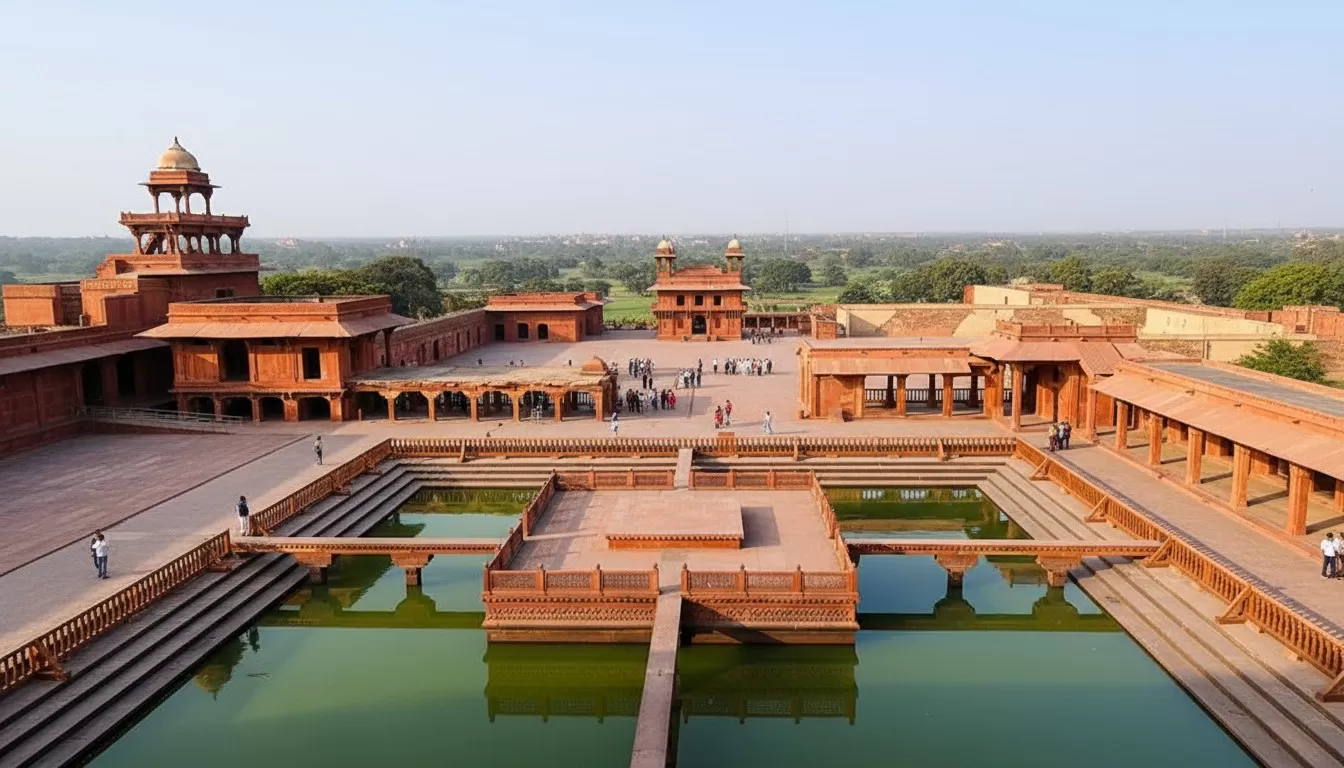
Fatehpur Sikri is a historic city located about 40 km from Agra in Uttar Pradesh. Built in the 16th century by the Mughal Emperor Akbar, it served as the capital of the Mughal Empire for a short period. The city is renowned for its magnificent red sandstone architecture, grand palaces, mosques, and courtyards. Recognized as a UNESCO World Heritage Site, Fatehpur Sikri reflects a unique blend of Hindu, Persian, and Islamic architectural styles and remains one of India's most important historical attractions.

🌍 About This Place

Fatehpur Sikri stands as one of the most remarkable examples of Mughal architecture and urban planning in India. Founded in 1571 by Emperor Akbar, the city was built to honor the Sufi saint Sheikh Salim Chishti, whose blessings were believed to have helped Akbar gain an heir. The emperor transformed this location into the capital of the Mughal Empire, creating a magnificent city filled with palaces, administrative buildings, religious structures, and residential quarters.Constructed primarily from red sandstone, Fatehpur Sikri showcases a fascinating blend of Persian, Islamic, and Hindu architectural styles. The city's most famous landmark is the impressive Buland Darwaza, a monumental gateway that symbolizes Akbar's victory over Gujarat. Other notable structures include Jama Masjid, one of India's largest mosques, the serene Tomb of Sheikh Salim Chishti, Panch Mahal with its five-tiered design, Diwan-i-Khas featuring the famous central pillar, and Jodha Bai's Palace known for its elegant architecture.
The layout of the city reflects Akbar's vision of governance, culture, and religious tolerance. Many buildings display intricate carvings, decorative brackets, geometric patterns, and artistic motifs that highlight the craftsmanship of the Mughal era. Although Fatehpur Sikri served as the imperial capital for only about 14 years before being abandoned due to water scarcity and strategic concerns, its architectural grandeur remains largely intact.

Today, visitors from around the world come to admire its historical significance, artistic excellence, and cultural heritage. Walking through its courtyards, gateways, and palaces offers a fascinating glimpse into the glory of the Mughal Empire. As a UNESCO World Heritage Site, Fatehpur Sikri continues to be one of India's most treasured historical destinations and a must-visit attraction for history enthusiasts, architecture lovers, and cultural travelers.

🎯 Things to do

  • Explore Buland Darwaza and Jama Masjid
  • Visit the Tomb of Salim Chishti
  • Walk through Akbar’s palaces and royal courts
  • Learn Mughal history through guided tours
  • Photography of heritage architecture
  • Experience local handicrafts and souvenirs.

📍 Near By

  • Agra Fort – 40 km
  • Taj Mahal – 43 km
  • Keoladeo National Park (Bharatpur Bird Sanctuary) – 25 km
  • Mehtab Bagh – Agra
  • Mathura & Vrindavan – 70–75 km.

🚗 How to Reach

  • By Air :-The nearest airport is Agra Airport  around 40 km away. From there taxis and buses are available.
  • By Train :-Fatehpur Sikri has a small railway station but most travelers arrive through Agra Cantt Railway Station which is well connected to major Indian cities.
  • By Road :-40 km from Agra ; 230 km from Delhi; Easily accessible by buses taxis and private vehicles via the Yamuna Expressway.

⭐ Why Visit

  • To explore stunning Mughal architecture.
  • To see the famous Buland Darwaza one of the largest gateways in the world.
  • To visit the beautiful Jama Masjid and the tomb of Sufi saint Salim Chishti.
  • To experience India’s rich history culture and royal heritage.
  • Ideal for photography architecture lovers and history enthusiasts.

💡 Travel Tips

  • Best time to visit: October to March.
  • Wear comfortable shoes because the complex is large.
  • Carry water sunglasses and a hat during summer.
  • Hire a local guide for better historical understanding.
  • Visit early morning or evening for pleasant weather and better
  • photographs.
  • Keep entry tickets safely during the visit.

✨ Special Features

  • Constructed mainly with red sandstone.
  • Blend of Persian Islamic and Hindu architectural styles.
  • Famous structures include:-Panch Mahal; Diwan-i-Khas; Anup Talao
  • Known as a “ghost city” because it was abandoned due to water shortages.

Qutub Minar

South Delhi Delhi

Qutub Minar is one of the most famous historical monuments in India and a symbol of Delhi's rich cultural heritage. Built in 1193 by Qutb-ud-din Aibak, the tower was later completed by his successors. Standing at a height of approximately 72.5 meters (238 feet), it is the tallest brick minaret in the world and is recognized as a UNESCO World Heritage Site. The monument showcases a remarkable blend of Indo-Islamic architecture with intricate carvings, Arabic inscriptions, and beautifully designed balconies.

🌍 About This Place

Qutub Minar is one of India's most celebrated historical landmarks and a masterpiece of medieval architecture located in the Mehrauli area of Delhi. Constructed in 1193 by Qutb-ud-din Aibak, founder of the Delhi Sultanate, the monument was later expanded and completed by subsequent rulers. Rising to a height of 72.5 meters, Qutub Minar is the tallest brick minaret in the world and attracts millions of visitors every year.

Built primarily from red sandstone with sections of marble added later, the tower consists of five distinct storeys, each adorned with projecting balconies and intricate decorative bands. The surface of the monument is covered with beautiful carvings and Arabic inscriptions that reflect the artistic excellence of the period. The structure represents a remarkable blend of Islamic and Indian architectural styles.
The Qutub Complex surrounding the minaret contains several significant historical monuments, including the Quwwat-ul-Islam Mosque, Alai Darwaza, Alai Minar, and the famous Iron Pillar, which has resisted corrosion for more than 1,600 years. These attractions make the complex a treasure trove of history and archaeology.

Recognized as a UNESCO World Heritage Site, Qutub Minar stands as a symbol of Delhi's rich past and cultural diversity. Visitors are captivated not only by its impressive height but also by the craftsmanship and historical importance it represents. The monument is especially beautiful during sunrise and sunset when the changing light enhances the color of the sandstone. For history lovers, architecture enthusiasts, photographers, and tourists, Qutub Minar offers an unforgettable glimpse into India's glorious heritage and remains one of the most visited monuments in the country.

🎯 Things to do

  • Walk around the Qutub Minar complex and gardens
  • See intricate carvings and inscriptions on the minaret surface
  • Attend the Light & Sound Show (seasonal)
  • Take photos & enjoy architectural details
  • Join a heritage walk focusing on historical context and stories.

📍 Near By

  • Mehrauli Archaeological Park Tour Guide – Extensive ruins & heritage trails
  • Zafar Mahal – 19th-century palace ruins
  • Hauz Khas Fort – Fort & urban village with cafes
  • Tughlaqabad Fort Delhi – Ancient fort complex
  • Safdarjung Tomb
  • Delhi & Humayun’s Tomb – Mughal-era tombs worth a visit .

🚗 How to Reach

  • By Air :-The nearest airport is Indira Gandhi International Airport located about 13 km away. Visitors can hire a taxi use app-based cab services or take the Delhi Metro from the airport to reach Qutub Minar.
  • By Train :-The nearest major railway stations are:-New Delhi Railway Station – about 18 km away; Hazrat Nizamuddin Railway Station – about 15 km away; Taxis auto-rickshaws and metro services are readily available from these stations.
  • By Metro :-The easiest way is via the Delhi Metro. Get down at Qutub Minar Metro Station on the Yellow Line. The monument is around 1.5 km from the station.
  • By Bus :-Delhi Transport Corporation (DTC) buses and private buses operate regularly from different parts of Delhi to Mehrauli where Qutub Minar is located.

⭐ Why Visit

  • UNESCO World Heritage Site.
  • Tallest brick minaret in the world.
  • Excellent example of Indo-Islamic architecture.
  • Rich historical and cultural significance.
  • Ideal destination for photography and history enthusiasts.
  • Beautiful gardens and ancient ruins within the complex.

💡 Travel Tips

  • Visit early morning or late afternoon to avoid crowds and heat.
  • Wear comfortable walking shoes.
  • Carry water especially during summer.
  • Photography is allowed making it a great spot for capturing heritage architecture.
  • Allocate at least 2–3 hours to explore the entire complex.
  • The best time to visit is from October to March when the weather is pleasant.

✨ Special Features

  • Height of 72.5 meters with 379 steps inside.
  • Constructed using red sandstone and marble.
  • Intricate Quranic inscriptions and carvings.
  • Houses the famous Iron Pillar of Delhi known for its rust-resistant properties.
  • Includes historic structures such as the Quwwat-ul-Islam Mosque and Alai Darwaza.

Amer fort

amer Jaypur Rajasthan

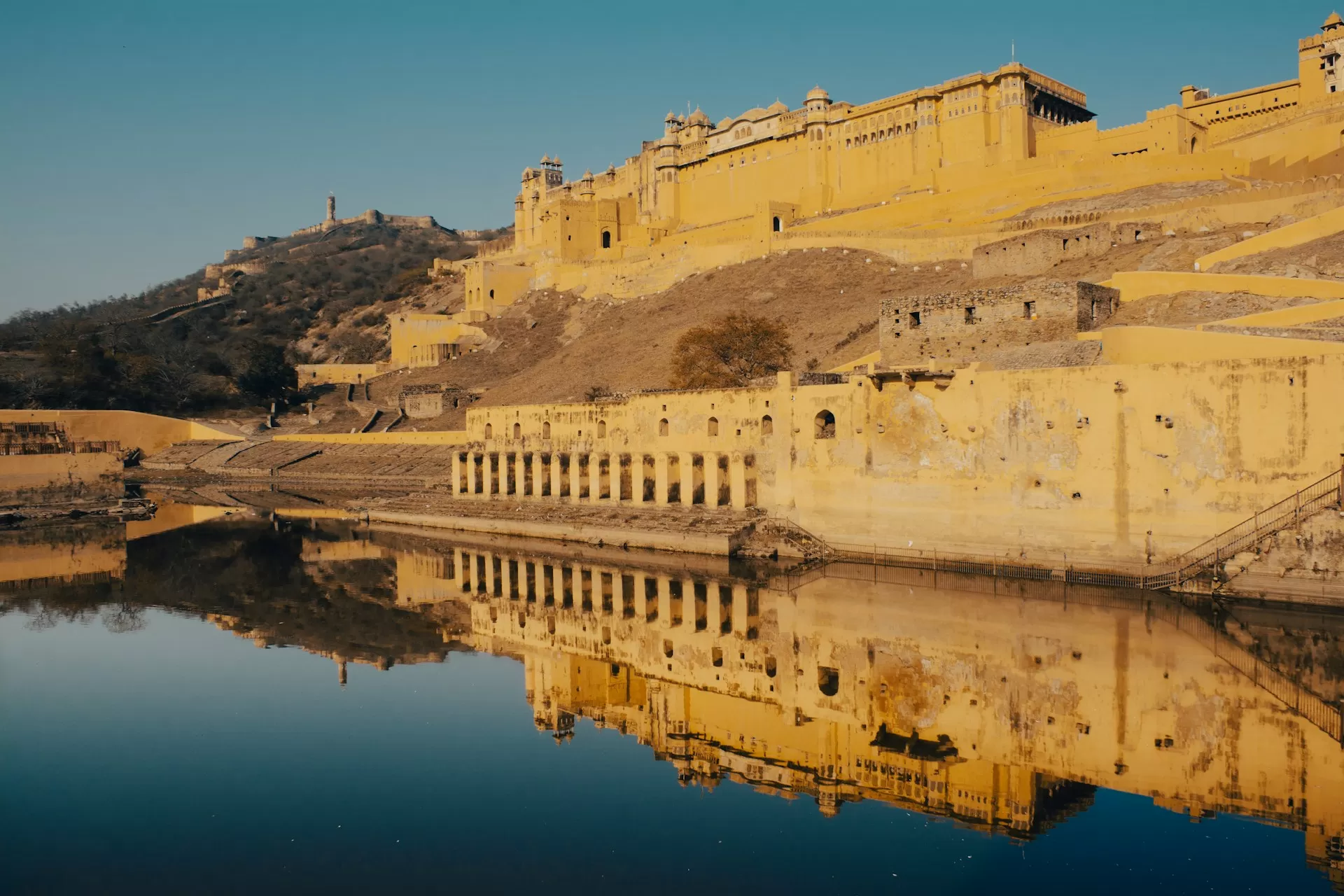
Amer Fort, also known as Amber Fort, is one of the most magnificent forts in India. Located about 11 kilometers from Jaipur in the state of Rajasthan, the fort was built primarily by Raja Man Singh I in 1592 and later expanded by successive rulers. Constructed from red sandstone and marble, the fort showcases a beautiful blend of Rajput and Mughal architectural styles. It is famous for its grand palaces, intricate mirror work, artistic carvings, spacious courtyards, and breathtaking views of the surrounding hills and lakes.

🌍 About This Place

Amer Fort, popularly known as Amber Fort, is one of Rajasthan's most famous historical monuments and a symbol of India's rich cultural heritage. Situated on a hill overlooking Maota Lake near Jaipur, the fort attracts millions of visitors every year. Built in 1592 by Raja Man Singh I and expanded by later rulers of the Kachwaha dynasty, the fort represents a remarkable blend of Rajput and Mughal architectural styles.

Constructed using red sandstone and white marble, Amer Fort is known for its impressive gateways, magnificent palaces, beautifully decorated halls, and intricate artwork. The fort complex includes several notable structures such as the Sheesh Mahal, Ganesh Pol, Diwan-i-Aam, Diwan-i-Khas, and Sukh Niwas. Among these, the Sheesh Mahal is particularly famous for its exquisite mirror work that reflects light in a dazzling manner, creating a magical atmosphere.
The fort's strategic hilltop location provided excellent defense while offering stunning views of the surrounding Aravalli Hills and Maota Lake. Visitors can explore large courtyards, royal chambers, temples, and gardens that showcase the grandeur of Rajput royal life. The architecture demonstrates exceptional craftsmanship through delicate carvings, colorful frescoes, lattice windows, and decorative paintings.

Amer Fort is also recognized as part of the UNESCO World Heritage-listed Hill Forts of Rajasthan, highlighting its historical and cultural significance. Beyond its architectural beauty, the fort offers valuable insights into the lifestyle, traditions, and military strength of Rajasthan's royal families. Whether admired for its history, artistic excellence, or scenic surroundings, Amer Fort remains one of India's most treasured tourist destinations. A visit to this magnificent fort provides an unforgettable experience and a deeper appreciation of Rajasthan's glorious past and architectural brilliance.

🎯 Things to do

  • Explore Sheesh Mahal/ Diwan-e-Aam/Diwan-e-Khas
  • Visit Shila Devi Temple inside the fort Walk through ornate courtyards and ancient halls. Photography: Especially popular at sunrise/sunset
  • Heritage Walks: Learn history and architecture with a guide
  • Light & Sound Show: Evening cultural storytelling
  • Elephant or Jeep Ride up the ramparts (available in morning hours).

📍 Near By

  • Panna Meena ka Kund (Stepwell): Symmetrical ancient well ~1 km away
  • Jaigarh Fort: Historic fort with large cannon and panoramic views ~4 km away
  • Nahargarh Fort: Hilltop fort offering sunset views and Jaipur panoramas ~7 km away
  • Maota Lake: Scenic lake at the base of Amer Fort
  • Kanak Vrindavan Gardens: Beautiful garden near the hills leading to Amer.

🚗 How to Reach

  • By Air :- The nearest airport is Jaipur International Airport  approximately 25 km from Amer Fort. Taxis app-based cabs  and buses are readily available from the airport.
  • By Train :- The nearest railway station is Jaipur Junction Railway Station about 13 km away. Jaipur is well connected to major Indian cities such as Delhi  Mumbai  Ahmedabad  and Kolkata.
  • By Bus :- Jaipur has excellent road connectivity with major cities in Rajasthan and neighboring states. Regular government and private buses operate to Jaipur. From Jaipur city local buses taxis and auto-rickshaws can be used to reach Amer Fort.
  • By Road :- Visitors can drive directly to Amer Fort via well-maintained roads. Parking facilities are available near the fort.

⭐ Why Visit

  • Stunning Rajput architecture.
  • Famous Sheesh Mahal (Mirror Palace).
  • Spectacular hilltop location and scenic views.
  • Rich historical significance.
  • Beautiful courtyards gardens  and palaces.
  • Excellent photography opportunities.
  • UNESCO World Heritage recognition as part of the Hill Forts of Rajasthan UNESCO World Heritage Site.

💡 Travel Tips

  • Visit early morning to avoid crowds and heat.
  • Wear comfortable walking shoes.
  • Carry water  sunscreen and a hat especially during summer.
  • Hire an authorized guide for a better understanding of the fort's history.
  • Keep a camera ready for panoramic views.
  • Avoid visiting during peak afternoon hours in summer.

✨ Special Features

  • Sheesh Mahal: Thousands of mirrors create dazzling reflections.
  • Ganesh Pol: An ornate gateway decorated with colorful frescoes.
  • Diwan-i-Aam: Hall for public audiences.
  • Diwan-i-Khas: Hall for private meetings.
  • Sukh Niwas: Ancient cooling system using water channels.
  • Maota Lake: Enhances the fort's scenic beauty.

Konark Sun Temple

Konark Puri Odisha

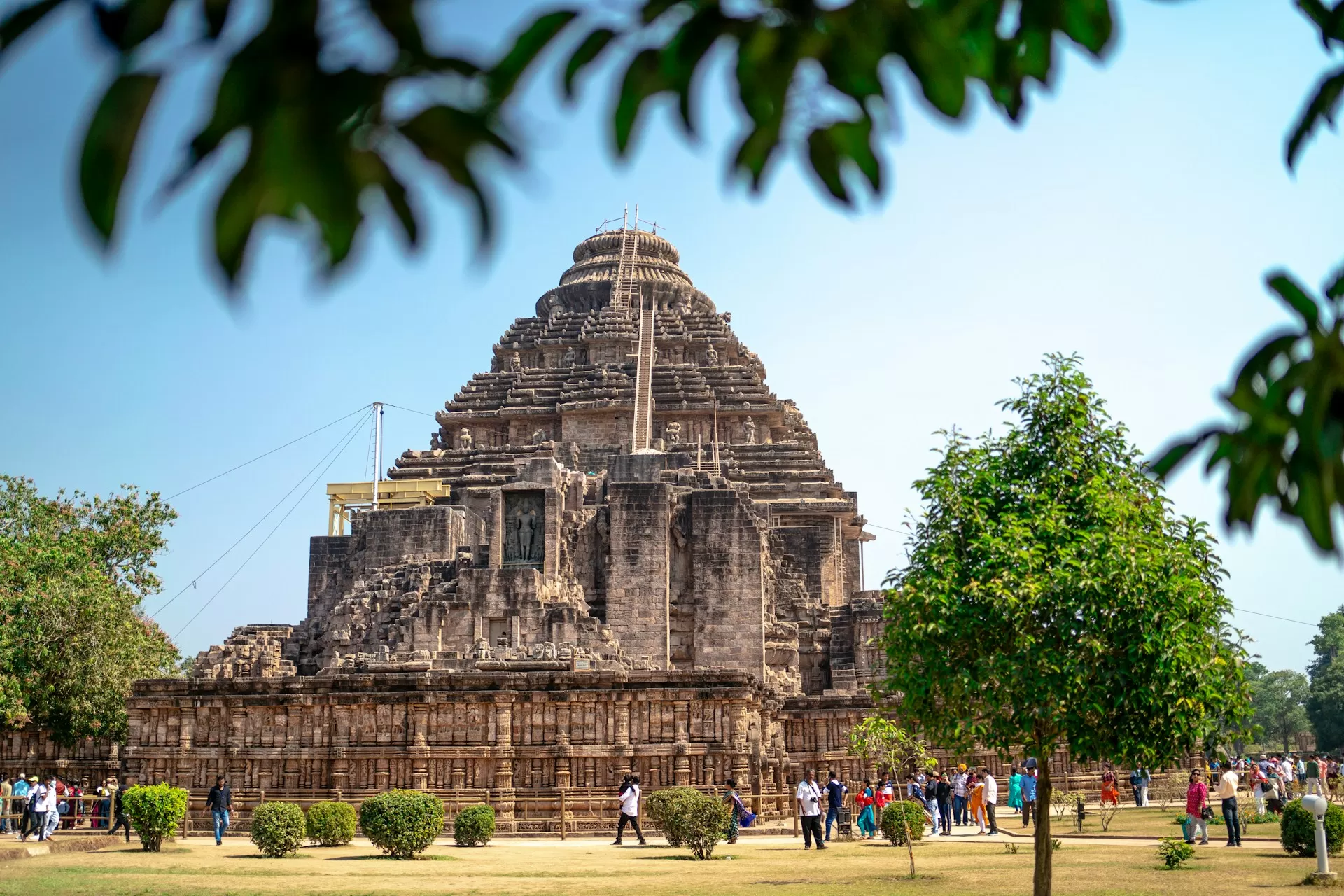
The Konark Sun Temple is one of India's most magnificent historical monuments, located in the town of Konark in the state of Odisha. Built in the 13th century by King Narasimhadeva I, the temple is dedicated to the Sun God, Surya. Designed in the form of a colossal stone chariot with twelve pairs of intricately carved wheels and seven horses, it represents the Sun God's journey across the sky. Recognized as a UNESCO World Heritage Site, the temple is celebrated for its remarkable architecture, artistic excellence, and historical significance. Although parts of the original structure have collapsed over time, the remaining carvings continue to amaze visitors with their precision and beauty. The temple reflects the advanced engineering, artistic skills, and cultural richness of medieval India, making it one of the country's most important heritage attractions.

🌍 About This Place

The Konark Sun Temple is one of India's most iconic architectural masterpieces and a symbol of the country's rich cultural heritage. Located on the eastern coast of Odisha, this magnificent temple was built in the 13th century by King Narasimhadeva I of the Eastern Ganga Dynasty. Dedicated to Surya, the Sun God, the temple was designed in the shape of a gigantic stone chariot drawn by seven horses and supported by twenty-four elaborately carved wheels.

The temple is renowned for its stunning stone carvings, which depict scenes from mythology, music, dance, everyday life, animals, and celestial beings. These intricate sculptures demonstrate the exceptional artistic talent and craftsmanship of the period. The wheels of the chariot are particularly remarkable, as they are believed to function as sundials capable of indicating time through the position of their shadows.
Konark Sun Temple represents the pinnacle of Kalinga architecture and reflects the scientific and engineering knowledge of ancient India. The structure was strategically aligned so that the first rays of the rising sun illuminated the sanctum. Although parts of the temple have been damaged over the centuries due to natural forces and invasions, its grandeur remains intact and continues to attract visitors from around the world.

Recognized as a UNESCO World Heritage Site, the temple serves as an important center for history, architecture, and culture. Visitors are captivated by its imposing size, artistic beauty, and historical significance. The annual Konark Dance Festival further enhances its appeal by bringing together classical dancers from across India. A visit to Konark Sun Temple offers a unique opportunity to experience the brilliance of ancient Indian architecture and the enduring legacy of one of the nation's greatest monuments.

🎯 Things to do

  • Explore detailed stone carvings and sculptures
  • Learn about ancient Indian astronomy
  • Photography of temple architecture
  • Visit the Konark Sun Temple Museum
  • Attend the Konark Dance Festival (December).

📍 Near By

  • Chandrabhaga Beach (3 km)
  • Ramachandi Temple & Beach
  • Puri Jagannath Temple
  • Chilika Lake
  • Konark Museum (ASI) .

🚗 How to Reach

  • By Air :-Nearest Airport: Biju Patnaik International Airport; Distance: Approximately 65 km from Konark.Taxis and buses are available from the airport.
  • By Train :- Nearest Railway Station: Puri Railway Station (about 35 km).Bhubaneswar Railway Station is about 65 km away.Regular taxis and buses connect both stations to Konark.
  • By Bus :- Frequent state-run and private buses operate from:Puri; Bhubaneswar ; Cuttack; Road connectivity is excellent via NH-316.

⭐ Why Visit

  • UNESCO World Heritage Site.
  • Extraordinary stone carvings and sculptures.
  • Unique chariot-shaped architecture.
  • Rich historical and cultural significance.
  • Famous sunrise views and photography opportunities.
  • Annual Konark Dance Festival showcasing Indian classical dance.

💡 Travel Tips

  • Visit between October and March for pleasant weather.
  • Early morning or late afternoon offers the best lighting for photography.
  • Wear comfortable walking shoes.
  • Carry water  sunscreen and a hat during summer.
  • Hire a local guide to understand the temple's history and symbolism.
  • Combine your trip with nearby Chandrabhaga Beach and Puri.

✨ Special Features

  • Temple designed as the Sun God's celestial chariot.
  • 24 giant stone wheels  many functioning as ancient sundials.
  • Detailed carvings depicting daily life music  dance and mythology.
  • Exceptional example of Kalinga architecture.
  • Alignment with the rising sun demonstrates advanced engineering knowledge.
  • Symbolizes the artistic and scientific achievements of ancient India.

Hampi

Hampi Vijayanagara Karnataka

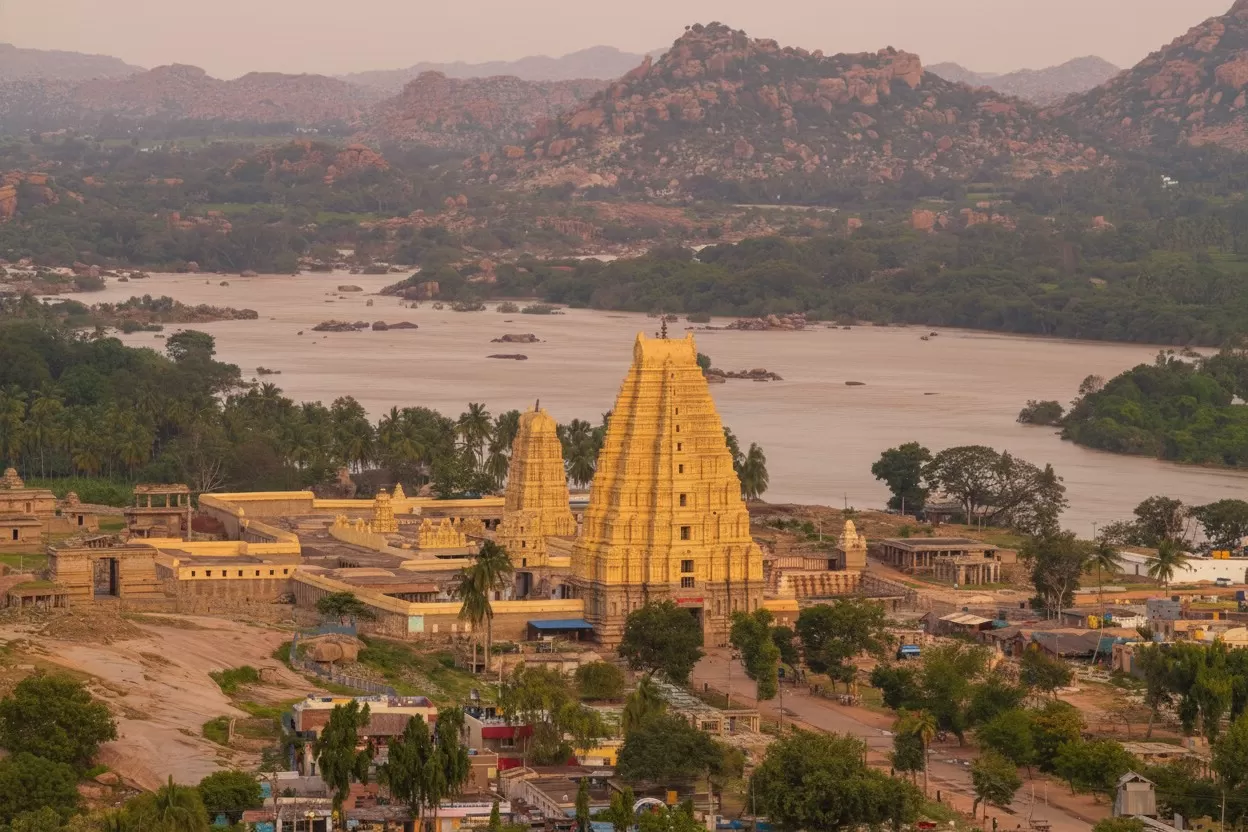
Hampi is one of India's most famous historical destinations, located in the state of Karnataka. It was the capital of the powerful Vijayanagara Empire during the 14th–16th centuries and is now recognized as a UNESCO World Heritage Centre World Heritage Site. Hampi is renowned for its magnificent temples, royal complexes, giant boulders, ancient markets, and stunning landscapes spread across a vast area along the Tungabhadra River.

🌍 About This Place

Hampi is a remarkable historical and archaeological destination situated on the banks of the Tungabhadra River in Karnataka. Once the glorious capital of the Vijayanagara Empire, Hampi flourished as one of the world's richest and most powerful cities during the 14th and 15th centuries. Today, the site preserves the grandeur of that era through its impressive collection of temples, palaces, markets, and monuments spread across a dramatic landscape of giant granite boulders.

The most celebrated attractions in Hampi include the Virupaksha Temple, Vittala Temple, Lotus Mahal, Elephant Stables, and the famous Stone Chariot, which has become a symbol of Karnataka's cultural heritage. The intricate carvings, architectural brilliance, and engineering achievements displayed in these structures continue to amaze visitors from around the world.
Apart from its historical significance, Hampi offers breathtaking natural beauty. The unique rocky terrain, scenic river views, and panoramic hilltops create an unforgettable setting for photography and exploration. Visitors can enjoy trekking, cycling, coracle rides, and heritage walks while discovering the stories hidden within the ancient ruins.

Hampi is not merely a collection of monuments; it is a living testament to India's rich cultural and architectural legacy. The peaceful atmosphere, combined with centuries of history and stunning landscapes, makes it a must-visit destination for history enthusiasts, photographers, researchers, and travelers alike. A visit to Hampi provides a fascinating journey into the past while offering memorable experiences amidst one of India's most extraordinary heritage sites.

🎯 Things to do

  • Explore Vittala Temple & Stone Chariot
  • Visit Virupaksha Temple (active temple)
  • Walk through Royal Enclosure
  • Watch sunset from Matanga Hill or Hemakuta Hill
  • Coracle (round boat) ride on Tungabhadra River
  • Photography of ruins and landscapes
  • Visit local bazaars & cafés
  • Cycling around heritage zones.

📍 Near By

  • Tungabhadra River Banks
  • Anegundi Village (heritage village)
  • Sanapur Lake
  • Matanga Hill
  • Hemakuta Hill
  • Daroji Sloth Bear Sanctuary (≈15 km).

🚗 How to Reach

  • By Air :-Nearest airport: Jindal Vijaynagar Airport (about 40 km from Hampi).Alternative airports:Hubballi Airport (around 165 km); Kempegowda International Airport (around 350 km)
  • By Train  :-Nearest railway station: Hosapete Junction (about 13 km from Hampi).Regular trains connect Hosapete with Bengaluru  Hyderabad  Goa Mumbai  and other major cities.
  • By Bus :-Karnataka State Road Transport buses and private buses operate from Bengaluru Hyderabad  Goa Hubballi and other cities to Hosapete.Auto-rickshaws  taxis and local buses are available from Hosapete to Hampi.

⭐ Why Visit

  • UNESCO World Heritage Site.
  • Spectacular ancient temples and monuments.
  • Famous Stone Chariot and musical pillars.
  • Unique landscape of giant granite boulders.
  • Rich history of the Vijayanagara Empire.
  • Excellent destination for photography heritage walks and cultural exploration.

💡 Travel Tips

  • Best time to visit: October to February.
  • Carry comfortable walking shoes and water.
  • Start sightseeing early to avoid afternoon heat.
  • Respect temple customs and heritage regulations.
  • Hire a local guide for a better understanding of the history.
  • Keep cash handy as some small vendors may not accept digital payments.

✨ Special Features

  • Iconic Stone Chariot at Vittala Temple.
  • Ancient Virupaksha Temple still an active place of worship.
  • Stunning sunrise and sunset viewpoints.
  • Coracle boat rides on the Tungabhadra River.
  • Massive boulder formations unlike anywhere else in India.

Bibi Ka Maqbara

Chhatrapati Sambhajinagar Maharashtra

Bibi Ka Maqbara is one of Maharashtra's most famous historical monuments and is often called the "Taj of the Deccan." It was built in the 17th century by Prince Azam Shah in memory of his mother, Dilras Banu Begum, the wife of Mughal Emperor Aurangzeb. The monument showcases beautiful Mughal architecture with a grand marble dome, elegant minarets, landscaped gardens, and intricate carvings. Surrounded by well-maintained gardens and water channels, it offers visitors a peaceful and picturesque experience.

🌍 About This Place

Bibi Ka Maqbara is one of the most celebrated historical monuments in Maharashtra and is often referred to as the "Taj of the Deccan." Located in Chhatrapati Sambhajinagar (formerly Aurangabad), this magnificent mausoleum was built by Mughal Prince Azam Shah in memory of his mother, Dilras Banu Begum, the wife of Emperor Aurangzeb. Constructed during the 17th century, the monument reflects the grandeur of Mughal architecture while maintaining its own distinctive identity.

The structure is set within a beautifully landscaped Charbagh garden, a traditional Persian-style garden divided into four sections by water channels and pathways. The mausoleum stands at the center of this garden, creating a visually striking and symmetrical layout. Its elegant dome, graceful minarets, decorative arches, and finely carved details make it one of the finest architectural achievements of the Deccan region.
Although inspired by the famous Taj Mahal, Bibi Ka Maqbara has unique characteristics that distinguish it from its more famous counterpart. The monument uses a combination of marble and basalt stone, showcasing the craftsmanship of local artisans. The peaceful gardens, fountains, and surrounding greenery create a serene atmosphere that attracts tourists, photographers, historians, and architecture enthusiasts throughout the year.

Today, Bibi Ka Maqbara serves as an important cultural and historical landmark, offering visitors a glimpse into the Mughal era and the rich heritage of Maharashtra. Its architectural beauty, historical significance, and tranquil surroundings make it one of the must-visit attractions in Chhatrapati Sambhajinagar and a treasured symbol of India's rich past.

🎯 Things to do

  • Explore Mughal architecture & carvings
  • Photography of monument and gardens
  • Walk in Charbagh garden area
  • Learn Mughal history (guided tours available)
  • Enjoy evening views with lighting.

📍 Near By

  • Siddharth Garden & Zoo – 2 km
  • Salim Ali Lake – 4 km
  • Panchakki (Water Mill) – 3 km
  • Aurangabad Caves – 7 km
  • Himayat Bagh – 6 km
  • Jayakwadi Dam (Paithan) – 50 km
  • Ellora Caves: 30 km
  • Ajanta Caves: 100 km
  • Daulatabad Fort: 15 km
  • Ghrishneshwar Jyotirlinga: 32 km.

🚗 How to Reach

  • By Air :- The nearest airport is Chhatrapati Sambhajinagar Airport located about 10 km from Bibi Ka Maqbara. Taxis auto-rickshaws and app-based cabs are available from the airport.
  • By Train :- The nearest railway station is Chhatrapati Sambhajinagar Railway Station about 5–6 km away. Regular trains connect the city with Mumbai Pune  Nagpur Hyderabad Delhi and other major cities.
  • By Bus :- State transport and private buses operate regularly from Mumbai Pune  Nashik Nagpur Hyderabad  and nearby cities to Chhatrapati Sambhajinagar. Local buses  autos and taxis can then take visitors to the monument.

⭐ Why Visit

  • Known as the "Taj of the Deccan."
  • One of the finest examples of Mughal architecture in Maharashtra.
  • Beautiful marble dome  gardens fountains and symmetrical design.
  • Rich historical significance linked to the Mughal era.
  • Excellent destination for photography and history enthusiasts.
  • Less crowded than the Taj Mahal offering a peaceful experience.

💡 Travel Tips

  • Visit early morning or late afternoon for pleasant weather and better photographs.
  • Carry water especially during summer months.
  • Wear comfortable walking shoes.
  • Keep a camera or smartphone ready for panoramic views.
  • The monument is beautifully illuminated during sunset.
  • Combine your visit with nearby attractions such as Daulatabad Fort and Ellora Caves.

✨ Special Features

  • Built between 1651 and 1661.
  • Commissioned by Prince Azam Shah in memory of his mother  Dilras Banu Begum.
  • Features a large central dome elegant minarets and Persian-style gardens.
  • Combines marble and basalt stone construction.
  • Surrounded by a well-planned Charbagh (four-part) garden layout.
  • Often called the "Mini Taj Mahal" due to its resemblance to the Taj Mahal.

Gateway of India

Mumbai Maharashtra

The Gateway of India is one of India's most iconic monuments, located on the waterfront in Mumbai overlooking the Arabian Sea. Built in 1924, this grand basalt arch was designed by architect George Wittet to commemorate the visit of King George V and Queen Mary to India in 1911. Standing about 26 meters high, the monument beautifully blends Indo-Saracenic, Hindu, and Muslim architectural styles. Today, it serves as a major tourist attraction and a symbol of Mumbai's rich colonial heritage.

🌍 About This Place

The Gateway of India is one of the most recognized monuments in India and a symbol of the vibrant city of Mumbai. Situated on the shores of the Arabian Sea at Apollo Bunder, the monument was constructed to commemorate the visit of King George V and Queen Mary to India in 1911. Although the foundation stone was laid in 1911, the structure was completed and opened to the public in 1924. Designed by architect George Wittet, the monument showcases a unique blend of Indo-Saracenic, Hindu, and Muslim architectural styles, making it a masterpiece of colonial-era architecture.

Built from yellow basalt stone and reinforced concrete, the arch stands approximately 26 meters high and faces the sea, creating a grand and welcoming appearance. Over the years, the Gateway of India has witnessed several important historical events, including the departure of the last British troops from India in 1948, symbolizing the end of British rule.
Today, the monument attracts millions of tourists from India and around the world. Visitors come to admire its architectural beauty, learn about its historical significance, and enjoy the scenic views of the Arabian Sea. The area around the Gateway is lively and bustling, featuring street vendors, photographers, and ferry services. It also serves as the departure point for boats to the famous Elephanta Caves, a UNESCO World Heritage Site.

Whether visited during the day or illuminated at night, the Gateway of India offers a memorable experience. Its rich history, impressive architecture, and picturesque location make it an essential destination for anyone exploring Mumbai and one of the most cherished landmarks of India.

🎯 Things to do

  • Take photographs of the monument and sea view
  • Enjoy boat rides to Elephanta Caves
  • Watch the sunset over the Arabian Sea
  • Explore nearby Colaba Causeway markets
  • Enjoy local street food
  • Visit nearby heritage buildings
  • Relax and observe city life.

📍 Near By

  • Taj Mahal Palace Hotel (opposite Gateway)
  • Elephanta Caves
  • Colaba Causeway (shopping street)
  • Chhatrapati Shivaji Maharaj Terminus (CSMT)
  • UNESCO site Marine Drive
  • Prince of Wales Museum (CSMVS)

🚗 How to Reach

  • By Air :-Nearest airport: Chhatrapati Shivaji Maharaj International Airport; Distance: Approximately 25 km.
  • Taxis app-based cabs and airport buses are readily available.
  • By Train :-Nearest railway station: Chhatrapati Shivaji Maharaj Terminus (about 3 km away).Other nearby station: Churchgate Railway Station (about 2 km away). Local taxis and buses connect the stations to the monument.
  • By Bus :-Regular city buses operated by BEST connect the Gateway of India with all major parts of Mumbai.
  • Taxis and auto-rickshaws are also available from nearby areas.

⭐ Why Visit

  • One of the most famous landmarks in India.
  • Spectacular views of the Arabian Sea.
  • Excellent photography opportunities.
  • Historical and architectural significance.
  • Starting point for ferry rides to Elephanta Caves.

💡 Travel Tips

  • Visit early morning or late evening to avoid crowds.
  • Carry water and wear comfortable footwear.
  • Keep belongings secure in crowded areas.
  • Enjoy a ferry ride for panoramic views of Mumbai's coastline.
  • Best season to visit: October to March.

✨ Special Features

  • Magnificent Indo-Saracenic architecture.
  • 26-meter-high basalt arch monument.
  • Waterfront location overlooking the Arabian Sea.
  • Historical importance as the ceremonial entrance to British India.
  • Popular venue for cultural events and celebrations.

Taj Majal

Agra Uttar Pradesh

The Taj Mahal is one of the world's most famous monuments and a UNESCO World Heritage Site located in Agra. Built by the Mughal Emperor Shah Jahan in memory of his beloved wife Mumtaz Mahal, it is considered the finest example of Mughal architecture. Constructed from white marble and adorned with intricate carvings, precious stones, and beautiful gardens, the monument symbolizes eternal love and architectural brilliance.

🌍 About This Place

The Taj Mahal, located in Agra, Uttar Pradesh, is one of the most magnificent monuments in the world and a symbol of eternal love. It was commissioned in 1632 by the Mughal Emperor Shah Jahan in memory of his beloved wife, Mumtaz Mahal, who passed away during childbirth. The construction took over twenty years and involved thousands of skilled artisans, craftsmen, and laborers.

Built entirely from gleaming white marble, the Taj Mahal is renowned for its extraordinary beauty, symmetry, and intricate decorative work. The monument stands on the banks of the Yamuna River and is surrounded by beautifully landscaped Mughal gardens, fountains, and reflecting pools that enhance its visual appeal. Delicate floral patterns, Quranic inscriptions, and precious stone inlays decorate the walls, showcasing the exceptional craftsmanship of the Mughal era.
The central dome rises majestically above the mausoleum and is flanked by four elegant minarets. One of the most fascinating features of the Taj Mahal is its changing appearance throughout the day. It appears pinkish in the morning, dazzling white during the day, and golden under the moonlight, creating a mesmerizing experience for visitors.

Recognized as a UNESCO World Heritage Site and one of the New Seven Wonders of the World, the Taj Mahal attracts millions of tourists every year. Beyond its architectural grandeur, it represents a timeless story of love, devotion, and artistic excellence. Visitors from across the globe come to admire its beauty, learn about its history, and experience the rich cultural heritage of India. The Taj Mahal remains not only a national treasure but also a universal symbol of love, beauty, and human creativity.

🎯 Things to do

  • You can admire its stunning marble architecture
  • Explore the inlaid designs and tombs inside
  • Stroll through the Charbagh gardens
  • Visit the museum and get unique views from the riverside or nearby spots like Mehtab Bagh or rooftops for sunrise/sunset
  • Plus explore Agra's other heritage sites like Agra Fort and Fatehpur Sikri.

📍 Near By

  • The historic Agra Fort
  • The beautiful "Baby Taj" (Itimad-ud-Daulah's Tomb)
  • The garden offering sunset views called Mehtab Bagh
  • The deserted city of Fatehpur Sikri and the grand Akbar's Tomb along with the stunning Jama Masjid and Mughal gardens like Ram Bagh.

🚗 How to Reach

  • By Air :-Nearest airport: Agra Airport; Better connectivity is available through Indira Gandhi International Airport about 230 km away.From Delhi  taxis  buses  and trains are readily available to Agra.
  • By Train :-Major railway stations:Agra Cantt Railway Station; Agra Fort Railway Station; Direct trains connect Agra with Delhi Mumbai  Kolkata Jaipur and many other cities..
  • By Bus :-Regular state and private buses operate from Delhi Jaipur  Lucknow and nearby cities.The Yamuna Expressway provides a comfortable road journey from Delhi to Agra

⭐ Why Visit

  • One of the Seven Wonders of the World.
  • UNESCO World Heritage Site.
  • Symbol of eternal love.
  • Magnificent Mughal architecture.
  • Stunning sunrise and sunset views.
  • Beautiful gardens and reflecting pools.
  • Rich historical and cultural significance.

💡 Travel Tips

  • Visit early morning to avoid crowds and heat.
  • Carry valid identification.
  • Wear comfortable footwear.
  • Avoid visiting on Fridays as the monument is closed for general visitors.
  • Carry water sunscreen  and a hat during summer.
  • Photography is allowed in most outdoor areas.

✨ Special Features

  • Built entirely of white Makrana marble.
  • Perfectly symmetrical architectural design.
  • Intricate marble inlay work using semi-precious stones.
  • Changes color throughout the day depending on sunlight.
  • Surrounded by beautiful Mughal gardens.
  • Recognized as a masterpiece of world heritage architecture.