
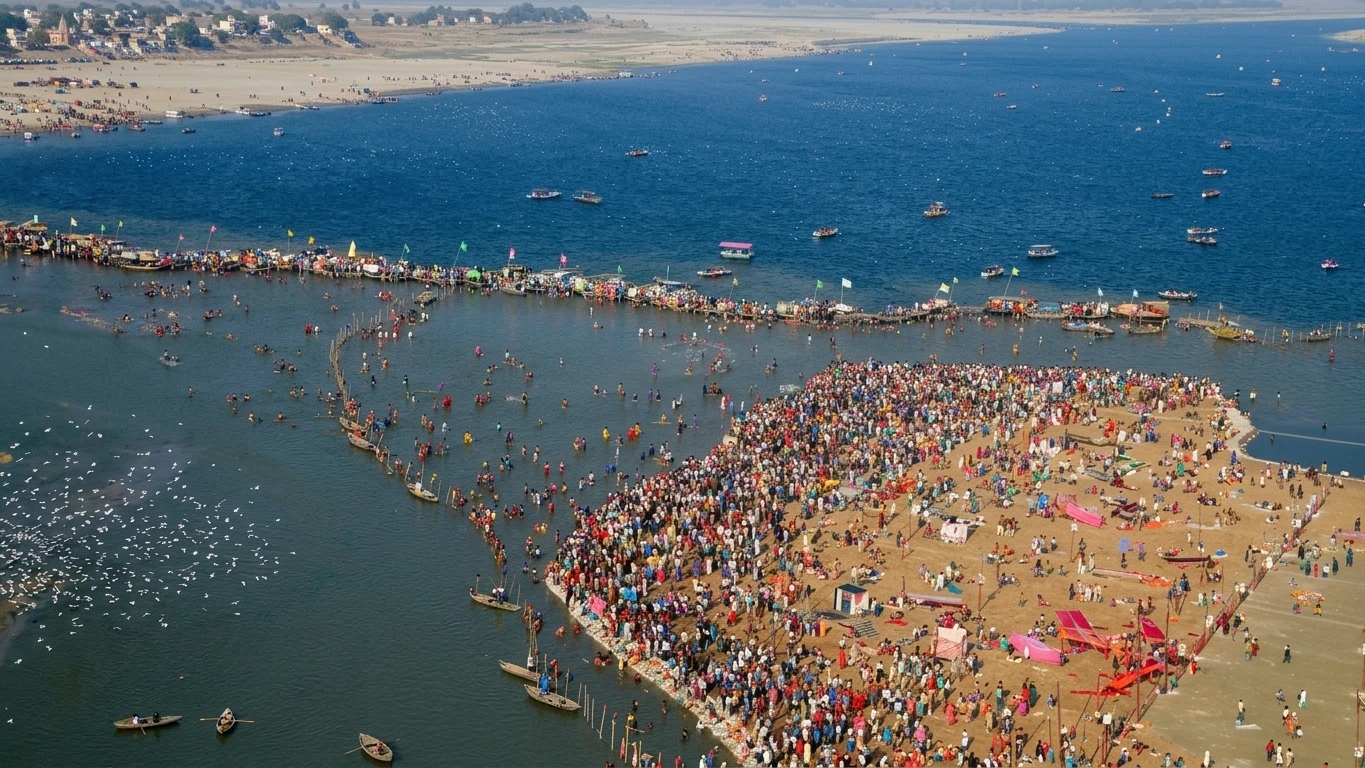
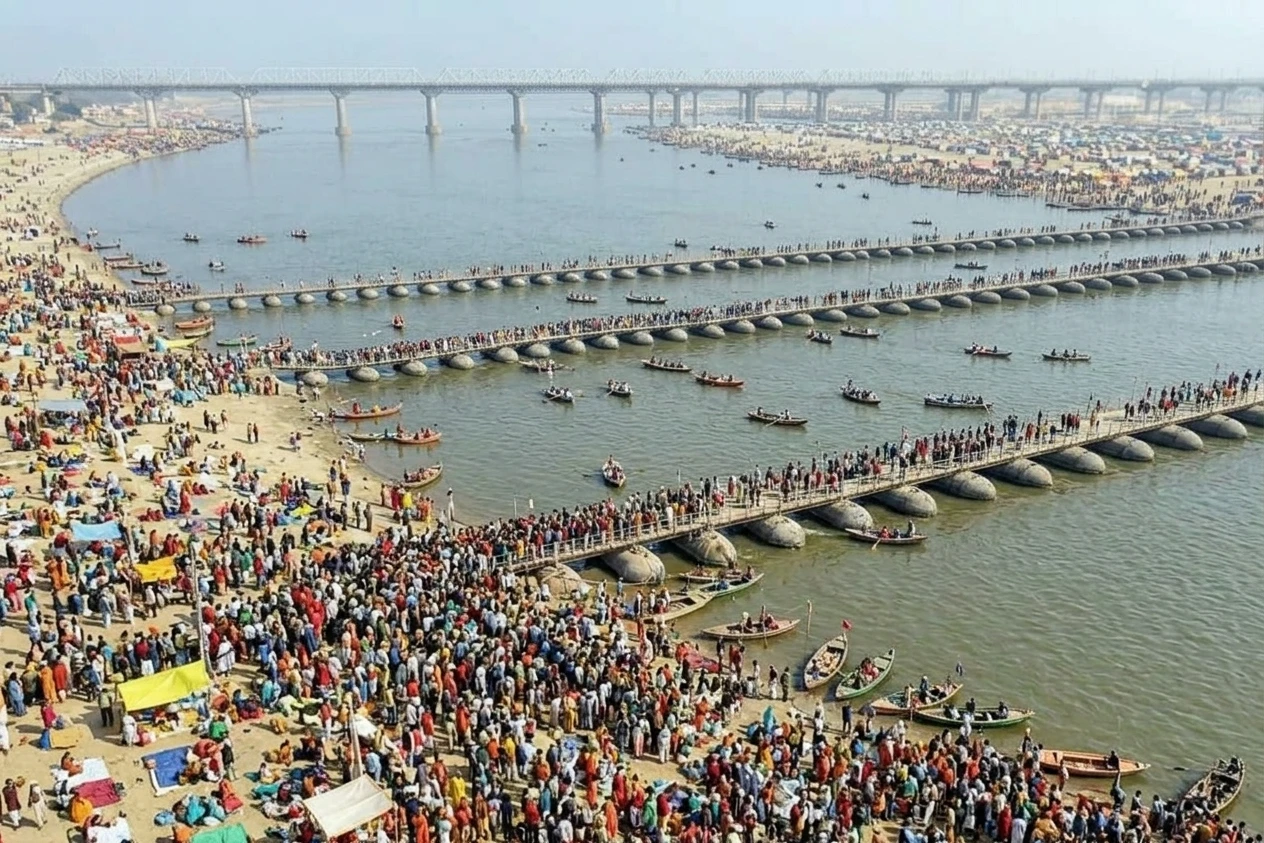
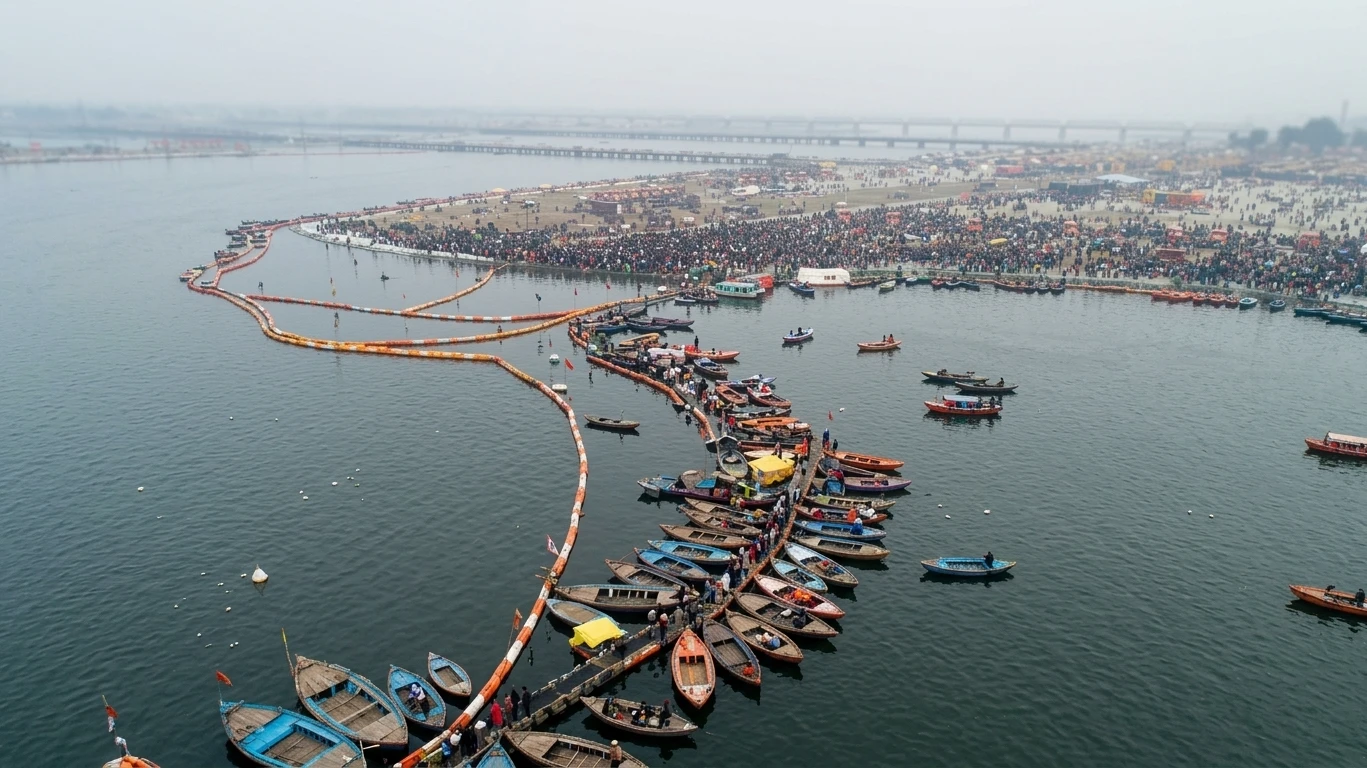
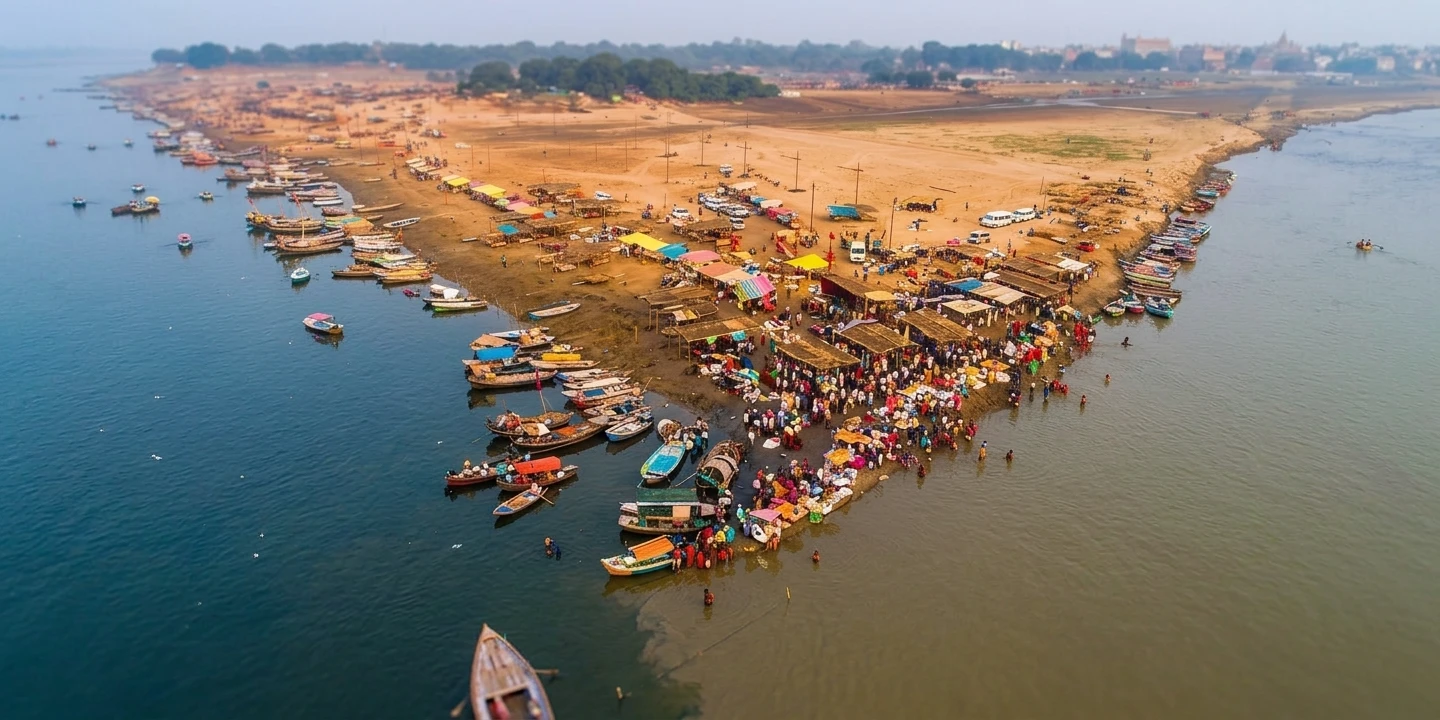
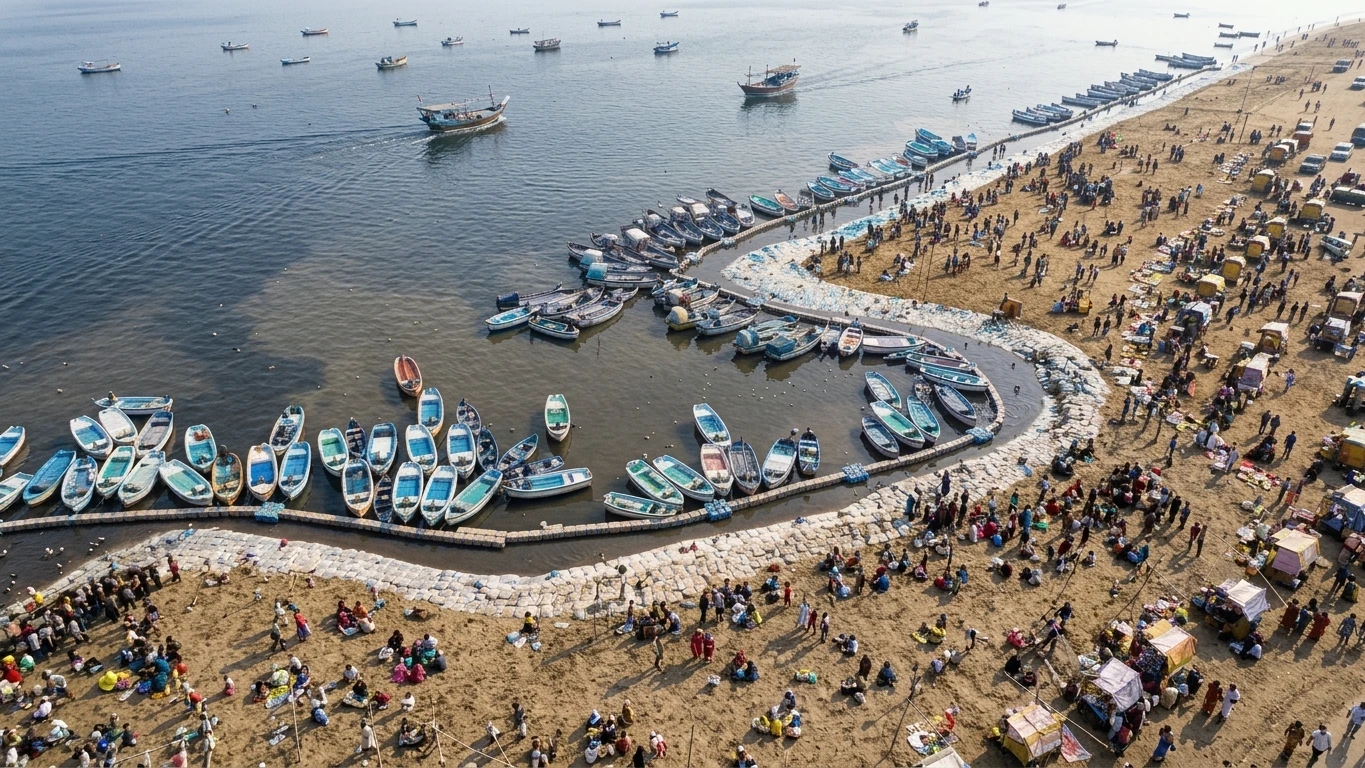
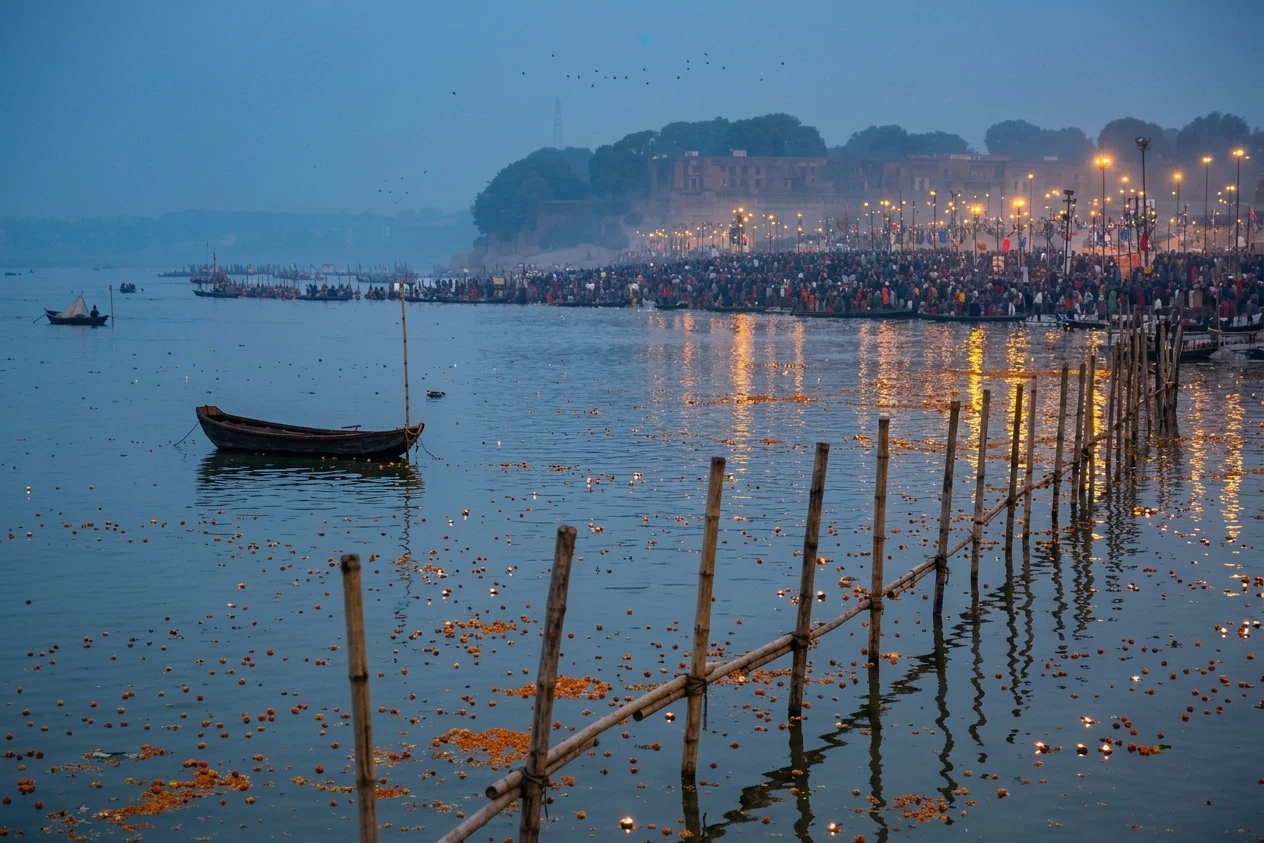
Triveni Sangam is a sacred river confluence in Prayagraj, Uttar Pradesh, India, where the Ganga and Yamuna rivers meet. According to Hindu tradition, the invisible Saraswati River also joins them here, making the site spiritually significant. Millions of devotees visit the Sangam to take a holy dip, perform religious rituals, offer prayers, and seek spiritual purification. The confluence is especially important during the Kumbh Mela, Magh Mela, and other Hindu festivals. Visitors can experience boat rides, beautiful river views, sunrise scenery, and the rich religious culture of Prayagraj. It is one of India's most revered pilgrimage destinations.
Triveni Sangam is one of the most sacred pilgrimage destinations in India, situated in Prayagraj, Uttar Pradesh. The word Triveni refers to three streams, while Sangam means a confluence or meeting point. The site is traditionally regarded as the meeting place of the Ganga, Yamuna, and the invisible or subterranean Saraswati River. The Ganga is generally associated with lighter, sediment-rich water, while the Yamuna often appears darker or greenish, making their meeting point an interesting natural sight.
The Sangam holds immense importance in Hindu religious traditions. It is also known as Tirtharaj, meaning the King of Pilgrimage Places. Devotees believe that bathing in these sacred waters, offering prayers, and performing rituals can bring spiritual purification and blessings. These are matters of religious faith and tradition.
The site becomes particularly important during the annual Magh Mela and the Kumbh Mela, which is traditionally associated with a twelve-year cycle at Prayagraj. During these events, pilgrims, saints, religious teachers, and visitors gather in very large numbers. The most auspicious bathing dates are determined according to Hindu religious calendars. Temporary facilities, roads, camps, security arrangements, and medical services may be established for major gatherings.
Visitors can approach the confluence by boat from designated riverfront access points, subject to river conditions and local regulations. A boat ride offers an opportunity to observe the meeting of the rivers, enjoy the broad river landscape, take photographs, and witness religious ceremonies. Many visitors also perform puja, offer flowers, or take a ritual bath. Anyone entering the water should follow local safety instructions, wear an appropriate life jacket when required, and avoid unsafe currents.
Triveni Sangam is also a gateway to Prayagraj's historical and cultural attractions. Nearby landmarks include Allahabad Fort, Bade Hanuman Ji Temple, and the Akshayavat area, while other parts of the city offer museums, historic gardens, and heritage buildings.
The best experience is generally during the cooler months, from October to March, especially around sunrise. However, river levels, fog, crowds, and festival arrangements may affect access. Visitors should confirm current timings and transport arrangements before travelling. With its combination of religious significance, natural scenery, history, and living traditions, Triveni Sangam offers a memorable introduction to India's spiritual heritage.